The Turning Tide: What Dharmendra Pradhan’s Resignation Means for Indian Politics
The Turning Tide: What Dharmendra Pradhan's Resignation Means for Indian Politics
BY-Smarajit Nayak
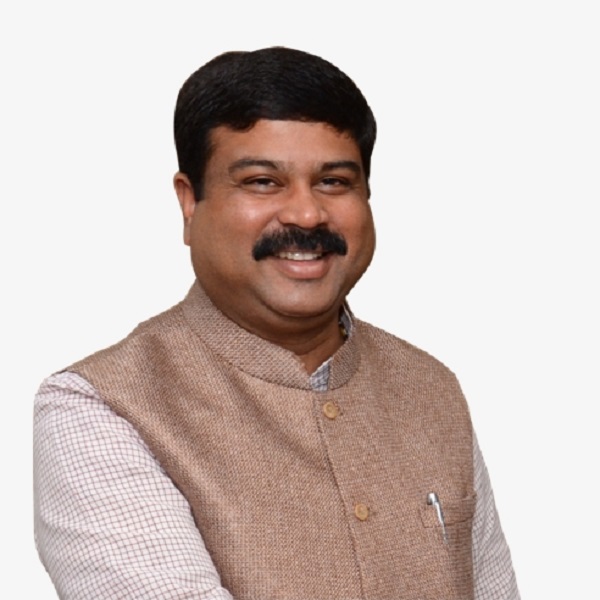
The political landscape of India experienced a seismic shift on July 25, 2026, when Union Education Minister Dharmendra Pradhan formally tendered his resignation. In a government known for its staunch resistance to public pressure and street protests, the departure of a high-profile cabinet minister under such circumstances is not merely a headline—it is a watershed moment that redefines the dynamics between the ruling establishment and the nation’s youth.
Pradhan’s exit brings an end to a tumultuous chapter that began with the NEET-UG examination leaks in May 2026, but the implications of his resignation will ripple through Indian politics for years to come. It signals the arrival of a new, formidable political demographic: the organized, unrelenting student voter.
The Catalyst: The NEET-UG Fiasco
To understand the magnitude of Pradhan’s resignation, one must trace it back to the genesis of the crisis. On May 3, 2026, millions of aspiring medical students appeared for the National Eligibility cum Entrance Test (NEET-UG). What should have been a standard academic milestone quickly devolved into a national scandal amid widespread allegations of paper leaks and systemic irregularities.
The government’s initial response—handing the investigation to the Central Bureau of Investigation (CBI), cancelling the exam, and promising a transition to a Computer-Based Test (CBT) model for the following year—did little to quell the outrage. For millions of students and their families, the integrity of the education system had been fundamentally compromised. The crisis deepened tragically as reports emerged of distraught aspirants dying by suicide, transforming academic anxiety into a visceral, emotional nationwide reckoning.
The Rise of the CJP and Youth Power
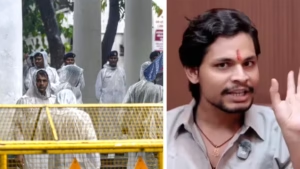
The vacuum of accountability was rapidly filled by a new and unexpected political force: the Cockroach Janta Party (CJP). Initially emerging as a satirical, youth-led movement, the CJP, under the leadership of founder Abhijeet Dipke, morphed into the vanguard of student anger.
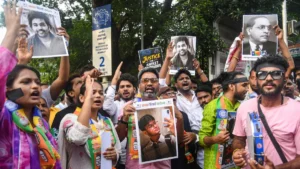
By July, the protests had coalesced at Delhi’s iconic Jantar Mantar, snowballing into one of the largest youth-led demonstrations in recent memory. The demands were explicit and non-negotiable: compensation for the families of the deceased students, absolute assurance against legal retribution for protesters, and, most crucially, the immediate resignation of Education Minister Dharmendra Pradhan.
The visual of thousands of students holding their ground created a pressure cooker situation for the central government. Even after environmentalist Sonam Wangchuk called off his supportive fast, the CJP refused to budge on their core demand for accountability.
Decoding the Resignation
When Dharmendra Pradhan took to social media to announce his departure, his messaging was meticulously crafted. He framed his resignation not as an admission of administrative failure, but as a sacrifice to protect the nation and its youth.
In his extensive letter to Prime Minister Narendra Modi, Pradhan cited the need to prevent “anti-national forces” from exploiting the unrest at Jantar Mantar. He emphasized that his priority was to ensure the nation remained united and that the future of Indian students did not get entangled in legal complexities. “This is not a matter of personal prestige for me. The youth power of India is the true strength of this country,” Pradhan wrote, attempting to secure a dignified exit while bowing to the inevitable.
However, political analysts recognize the subtext. The Modi government, historically characterized by its refusal to concede to street agitations, was forced to blink. Sources suggest the government was keen to give him a dignified exit, allowing him to take “moral responsibility” rather than formally sacking him. The resignation underscores a crucial vulnerability: the ruling party cannot afford to alienate the youth demographic, a cornerstone of its electoral success.
The Impact on Indian Politics
Dharmendra Pradhan’s resignation alters the contemporary political playbook in several profound ways.
1. A Victory for Sustained Civic Action For the first time in recent memory, a grassroots movement spearheaded by students forced a cabinet shakeup. CJP’s Abhijeet Dipke captured the sentiment perfectly in the aftermath of the announcement: “This resignation is proof that if you people are not afraid, if you people do not bow down to this government, then we can take the resignation of anyone”. This sets a powerful precedent for civil society and opposition groups, demonstrating that the current administration is not impervious to sustained, well-organized public outrage.
2. Youth as a Unified Political Bloc Historically, the Indian youth vote has been fragmented along lines of caste, religion, and regional identity. The NEET-UG protests, however, united students across these traditional fault lines under a shared grievance: the safeguarding of their educational and professional futures. The CJP’s ability to mobilize this demographic highlights a shift where issues like employment, exam integrity, and educational reform can supersede traditional identity politics. Political parties will now be forced to address these concerns head-on rather than relying solely on ideological rhetoric.
3. Internal Accountability within the Ruling Party Internally, Pradhan’s exit serves as a cautionary tale for the leadership. While he officially stepped down on moral grounds, the move indicates that internal performance metrics—especially those directly impacting massive voting blocs—are being ruthlessly scrutinized. It reflects a strategic calculation by the top leadership to cut its losses before the discontent could spread to other sectors.
4. The Road Ahead for Educational Reforms With Pradhan stepping down, the incoming administration at the Ministry of Education faces an uphill battle to restore faith in institutions like the National Testing Agency (NTA). The promised shift to a Computer-Based Test (CBT) format and the ongoing committee reviews led by figures like former ISRO chief K. Radhakrishnan will be watched with hawkish intensity by a now-empowered student body. The new minister will inherit a portfolio fraught with skepticism and a zero-tolerance policy from the public.
Conclusion
The resignation of Dharmendra Pradhan is more than the fall of a minister; it is the rise of a new political consciousness in India. The events of July 2026 have proven that when the youth of the country feels its future is compromised, it possesses the power to hold the highest echelons of government accountable.
As the dust settles at Jantar Mantar and students celebrate their victory, the message to the political establishment is unequivocally clear: the youth are no longer just the “future of the nation”—they are its most potent, immediate political force. How the government rebuilds the shattered trust of millions of students will likely define its trajectory in the critical years leading up to the 2029 general elections.