The Third Front Disruption: How an Owaisi-Azad Alliance Could Redraw Uttar Pradesh’s Political Map
The Third Front Disruption: How an Owaisi-Azad Alliance Could Redraw Uttar Pradesh's Political Map
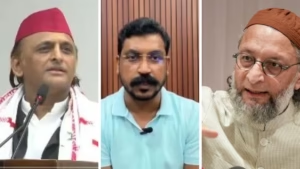
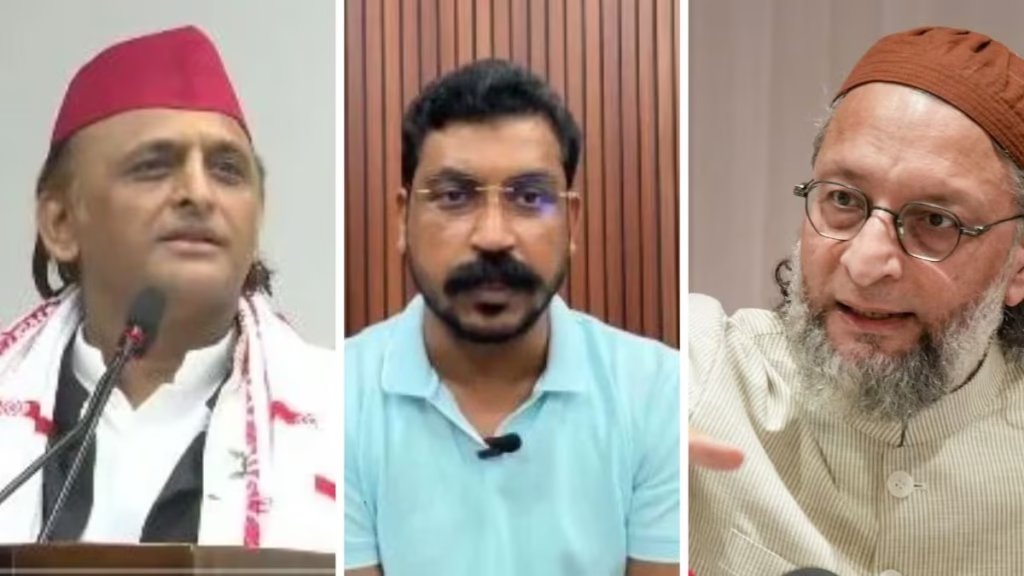
The upcoming 2027 Uttar Pradesh Assembly elections are witnessing a seismic shift as a potential third front, spearheaded by AIMIM chief Asaduddin Owaisi and Bhim Army founder Chandrashekhar Azad, threatens to upend the established political calculus. While the primary electoral battleground has long been framed as a direct, high-stakes contest between the BJP-led NDA and the Samajwadi Party-led INDIA bloc, this nascent alliance aims to aggressively consolidate the state’s formidable 40 percent Dalit and Muslim vote bank. If successful, this strategic disruption poses a severe existential threat to Akhilesh Yadav’s poll mathematics and could reshape the state’s legislative future.
The Geometry of the 40 Percent Vote Bank
Uttar Pradesh’s demographic landscape has historically dictated the political destiny of the nation. Muslims and Dalits collectively account for nearly 40 percent of the state’s electorate, serving as the traditional, unbreakable backbone for both the Samajwadi Party (SP) and the Bahujan Samaj Party (BSP).
With the BSP experiencing a prolonged structural and electoral decline, a massive vacuum has opened in Dalit political representation. The Samajwadi Party, under the leadership of Akhilesh Yadav, has attempted to swiftly capitalize on this void through the PDA (Pichda, Dalit, Alpasankhyak) formula, aiming to unite backward classes, Dalits, and minorities under one umbrella. However, Azad and Owaisi are positioning themselves not just as political alternatives, but as the authentic, grassroots voices of their respective communities. Their core argument is potent: mainstream opposition parties have historically exploited these groups merely as captive vote banks without offering them proportional, dignified representation in political leadership.
Owaisi’s Calculated Gamble and the Bihar Blueprint
Asaduddin Owaisi’s aggressive push into Uttar Pradesh is driven by a complex mix of strategic ambition and political retaliation. After his overtures to join the INDIA bloc were categorically rebuffed by Akhilesh Yadav—who preferred to keep AIMIM at a strict arm’s length to prevent the Hyderabad-based party from establishing a firm foothold among UP’s Muslim voters—Owaisi has intensified his independent ground campaign.
AIMIM is reportedly identifying 40 to 45 Muslim-majority constituencies across the state to field strong candidates. Owaisi hopes to replicate his famous “Bihar Model.” During the Bihar assembly elections, AIMIM stunned political pundits by winning five seats in the Muslim-dominated Seemanchal region after the Mahagathbandhan rejected his seat-sharing demands. To signal his serious intent in UP, Owaisi is slated to formally launch his election campaign with a massive rally from Meerut’s Nauchandi Maidan, heavily targeting the Western UP belt.
However, political analysts point out a critical geographical distinction between Bihar and Uttar Pradesh that could hamper Owaisi’s ambitions:
- Concentration vs. Dispersion: In Bihar’s Seemanchal, Muslim voters form a highly concentrated, decisive electoral bloc across contiguous constituencies. In Uttar Pradesh, while the population is massive in absolute numbers, it is widely distributed across multiple sub-regions, including Rohilkhand, Western UP, parts of Awadh, and the eastern districts.
- The Reality of Tactical Voting: In the 2022 UP Assembly elections, AIMIM faced a crushing reality check. Muslim voters heavily prioritized tactical voting over identity-based representation, throwing their weight entirely behind the SP to ensure a direct, unified fight against the BJP. Four of AIMIM’s candidates in Meerut district alone failed to even cross the 5,000-vote mark. The crucial question for 2027 is whether these voters are frustrated enough with the SP to risk dividing the anti-BJP vote.
Chandrashekhar Azad: The Rising Dalit Icon
Chandrashekhar Azad’s remarkable trajectory from a street-level grassroots activist to the Member of Parliament from Nagina has cemented his status as a formidable, disruptive force in Dalit politics. His aggressive, unapologetic brand of activism resonates deeply with a younger generation of Dalit voters who feel increasingly alienated by the BSP’s current political passivity.
By aligning with Owaisi, Azad is attempting to forge a formidable social coalition built on the “Jai Bhim, Jai Meem” ideology. He is making a massive push to consolidate the fractured Dalit vote, arguing that true empowerment requires independent political agency rather than reliance on Yadav-dominated socialist frameworks. If Azad can successfully transfer even a fraction of the Dalit youth vote to this new third front, it will severely destabilize the opposition’s carefully constructed social arithmetic.
The Dilemma for Akhilesh Yadav
The intense speculations of a formal press event in Lucknow to announce this tie-up have sparked significant anxiety within the Samajwadi Party camps. Akhilesh Yadav’s PDA slogan is currently facing immense, critical scrutiny. Critics from within the marginalized communities argue that the SP’s Dalit and Muslim outreach often feels like empty rhetoric designed only for election seasons.
To prevent a massive vote drain to the Owaisi-Azad front, political strategists are explicitly exhorting the SP leadership to move beyond mere caste slogans. The survival of the PDA alliance dictates that the SP must demonstrably give these communities a real, structural say in the party’s organizational hierarchy, ensure transparent ticket distribution, and elevate them to long-term political leadership roles. Without tangible representation, the alliance risks fracturing just when it needs absolute unity to take on the NDA juggernaut. Furthermore, backdoor talks are reportedly underway to bring more fringe parties and local leaders into the Owaisi-Azad fold.
The Ultimate Beneficiary: The BJP Equation
In India’s First-Past-The-Post electoral system, a divided opposition is the greatest structural asset for an incumbent government. The emergence of a strong third front heavily and directly benefits the Bharatiya Janata Party.
The underlying political math is brutally straightforward: if the Owaisi-Azad alliance manages to secure even five to six percent of the overall state vote, those votes will be pulled almost entirely from the INDIA bloc’s reservoir. In dozens of closely contested constituencies where the margin of victory is incredibly thin, a third front capturing Dalit and Muslim votes would inadvertently pave the way for easy BJP victories, splitting the anti-incumbency sentiment right down the middle.
While neither Azad nor Owaisi have officially put pen to paper to confirm the alliance yet, the sheer momentum of these developments proves that Uttar Pradesh’s political landscape remains highly volatile. The SP faces the monumental task of keeping its flock together, knowing well that in the complex theater of UP politics, it only takes a minor disruption in the vote bank to change the destiny of the state and, consequently, the nation.