Digital Crackdown: Delhi Police Targets Social Media Amid NEET Protests
Digital Crackdown: Delhi Police Targets Social Media Amid NEET Protests
As the physical barricades at Jantar Mantar remain formidable, a new front has opened in the ongoing standoff between the Indian government and student protesters. Following the chaotic and violent events of the July 20 ‘Sansad Chalo’ march, the Delhi Police have initiated a sweeping digital crackdown. Authorities have directed multiple social media platforms to immediately remove posts, videos, and comments containing offensive or abusive language directed at Prime Minister Narendra Modi and the central government.
This move marks a significant escalation in how the state is managing the fallout from the NEET-UG paper leak controversy. What began as an offline demand for educational reform and the resignation of the Education Minister has now morphed into a broader battle over the boundaries of free speech, the right to protest, and the policing of digital spaces.
The Digital Dragnet
On Monday, July 27, 2026, Delhi Police officials confirmed that their dedicated social media monitoring cell is operating around the clock, continuously scanning platforms like X (formerly Twitter), Instagram, Facebook, and YouTube.
The primary objective of this exercise, according to police sources, is to identify content that uses “abusive language,” “crude comments,” or poses a threat to public order in the wake of the violent clashes. Once such posts are detected, the police issue formal notices to the respective social media intermediaries, legally obligating them to take down the specified content. Several posts and videos have already been scrubbed from the internet as a result of these directives.
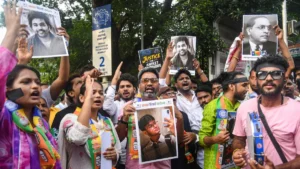
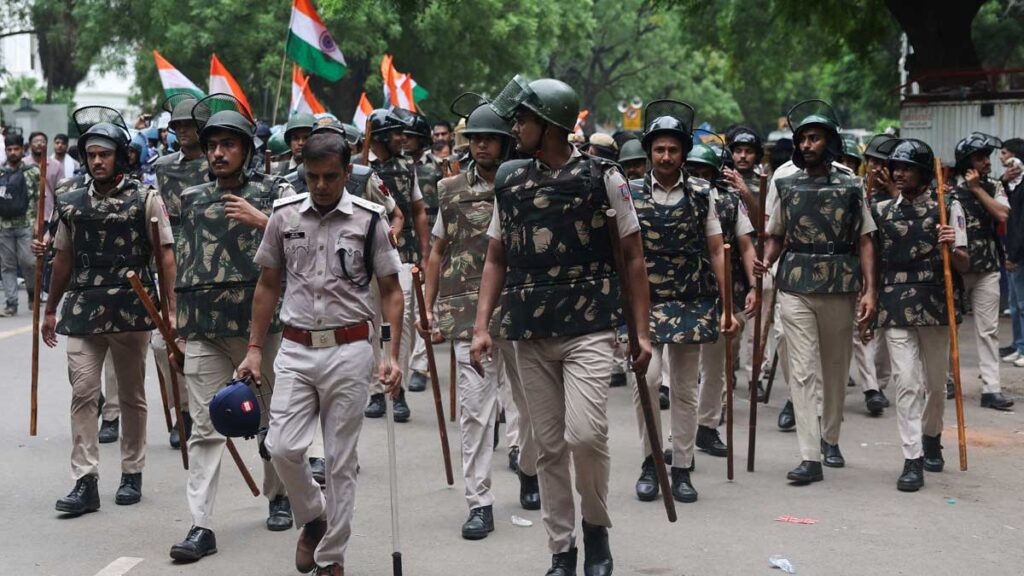
The police justify this action by pointing to the intense volatility of the situation. According to official data, the July 20 clashes resulted in injuries to at least 130 police personnel and around 65 students, leading to the registration of 15 First Information Reports (FIRs). With an estimated 10,000 protesters gathering daily at Jantar Mantar prior to the crackdown, the police argue that inflammatory online rhetoric could easily incite further real-world violence.
Furthermore, the authorities have defended their use of advanced technology, stating that Facial Recognition System (FRS) cameras have been deployed at the protest sites to identify “anti-social elements.” The police claim this technology has already flagged over 2,000 individuals with prior criminal records attempting to infiltrate the student demonstrations, suggesting that the violence was not organic but orchestrated by external disruptors.
The Viral Evidence of Brutality
The timing of this digital crackdown is highly contentious. The move to suppress certain online narratives comes precisely when social media has become the primary—and sometimes only—tool for protesters to broadcast evidence of alleged state violence.
Following the July 20 march led by the Cockroach Janta Party (CJP), the internet was flooded with harrowing visual evidence contradicting the official police narrative. Multiple video clips circulated widely, showing personnel in uniform and plainclothes wielding sticks with nails, smashing vehicles, and resorting to extreme force.
Crucially, some of the most disturbing footage documented alleged assaults on women. One viral video appeared to show a senior, identifiable police official slapping a female bystander, while another allegedly captured personnel groping a female protester. Furthermore, evidence of the use of pellet guns—resulting in severe injuries to unarmed students and even a journalist—has sparked national outrage.
For the protesting students, who include teenagers and aspiring doctors, social media is not merely a platform for dissent; it is a mechanism for survival and accountability. The digital crackdown is viewed by activists not as an attempt to maintain public order, but as a calculated effort to sanitize the narrative, silence victims, and erase digital evidence of police brutality before it can be used in courts of law.
The Political and Legal Fallout
The intersection of offline violence and online censorship has handed the political opposition potent ammunition. As the Parliament’s monsoon session resumed on Monday, the INDIA bloc moved several adjournment motions in the Lok Sabha and suspension of business notices in the Rajya Sabha. The opposition is demanding an immediate, transparent discussion on what they term the “brutal and disproportionate” use of force by security personnel.
Leader of the Opposition Rahul Gandhi has been vocal in demanding accountability for the use of pellet guns and the alleged targeting of female protesters. The digital takedowns add another layer to these parliamentary demands, with opposition leaders accusing the government of attempting to hide its heavy-handed tactics behind a wall of censorship.
The battle has also reached the highest judicial echelons. Following initial hesitation, the Supreme Court of India, under Chief Justice Surya Kant, has agreed to hear a batch of petitions detailing the alleged police excesses. Scheduled for a crucial hearing on Tuesday, July 28, the apex court will have to navigate the complex terrain between the state’s duty to maintain law and order and the citizens’ constitutional right to peaceful protest and free expression.
A Dangerous Precedent?
The situation unfolding in New Delhi is a stark reminder of the modern anatomy of protest. The state is no longer merely fighting crowds on the streets; it is fighting narratives on the screens.
While the Delhi Police maintain that their actions are targeted solely at abusive language and anti-social elements, civil rights advocates warn of a chilling effect. When the line between legitimate criticism of the government and “offensive” content is blurred, digital crackdowns can easily become a tool to stifle legitimate dissent.
As the Supreme Court prepares to weigh in, the NEET protests have evolved far beyond the realm of educational integrity. They have become a defining test of India’s democratic resilience, forcing the nation to ask uncomfortable questions about how far the state can go—both on the streets and online—to maintain control.