Relentless Surge: Petrol and Diesel Prices Hiked for the Fourth Time in Two Weeks Amid Severe Inflation Warnings
Relentless Surge: Petrol and Diesel Prices Hiked for the Fourth Time in Two Weeks Amid Severe Inflation Warnings
New Delhi, May 25, 2026
In a development that threatens to trigger widespread inflationary pressures across the Indian economy, state-run oil marketing companies (OMCs) have once again raised the retail prices of petrol and diesel. On Monday, consumers woke up to the fourth fuel price hike in less than a fortnight, with rates increasing by a steep margin of Rs 2.61 to Rs 2.71 per litre across major metropolitan cities. This relentless upward trajectory in domestic fuel costs is a direct consequence of the ongoing geopolitical crisis and conflict in West Asia, which has sent international crude oil prices spiraling out of control. As fuel becomes increasingly expensive, the cascading effects on daily household budgets and the broader macroeconomic landscape are becoming a critical cause for concern.
The Timeline of Escalation and City-Wise Breakdown
The recent sequence of aggressive price hikes marks a stark departure from the prolonged freeze in fuel rates that Indian consumers had recently experienced. The wave of revisions commenced on May 15, when oil companies implemented a massive ₹3 per litre increase—notably the first major upward revision in nearly four years. This initial shock was swiftly followed by a 90 paise per litre increase on May 19, and another 87 to 91 paise hike just days later on May 23.
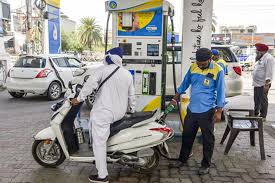
Following Monday’s latest and substantial hike, the financial burden on the average commuter has grown significantly. In the national capital, Delhi, petrol prices have surged to Rs 102.12 per litre, up from the previous rate of Rs 99.51, while diesel rates have climbed to Rs 95.20 from Rs 92.49. The financial capital, Mumbai, predictably bears the heaviest brunt among the metros, with petrol at public sector pumps now commanding a staggering Rs 111.21 per litre and diesel priced at Rs 97.83. Similarly, consumers in Kolkata are now paying Rs 113.51 for a litre of petrol and Rs 99.82 for diesel. In the southern metropolis of Chennai, the revised prices stand at Rs 107.77 for petrol and Rs 99.55 for diesel.
The Geopolitical Catalyst: West Asia in Turmoil
The primary driver behind this sudden and aggressive price revision is the severe volatility in the international energy markets. The escalating conflict in West Asia has severely disrupted global supply chain expectations, driving international crude oil prices sharply higher. Market data reveals that global crude prices have surged by more than 50 per cent over the past few months.
To contextualize this surge, India’s crude oil import basket was averaging a manageable USD 69 per barrel in February, just before the geopolitical tensions boiled over into open conflict. In the subsequent months, as uncertainty gripped the global markets, prices skyrocketed to an intimidating average of USD 113 to USD 114 per barrel. Because India imports over 80 per cent of its crude oil requirements, the domestic market is highly susceptible to such massive external shocks.
The Breaking Point for Oil Marketing Companies
Despite the steep and sustained rise in global crude prices throughout the spring, state-owned OMCs—namely Bharat Petroleum Corporation Limited (BPCL), Indian Oil Corporation (IOCL), and Hindustan Petroleum Corporation Limited (HPCL)—had remarkably managed to keep retail fuel prices unchanged for a period of 11 weeks (76 days). These three public sector giants, which collectively control more than 90 per cent of India’s vast network of 103,000 fuel stations, absorbed the initial shock to shield consumers from sudden economic pain.
However, the prolonged freeze eventually became financially unsustainable. Reports indicate that these companies were bleeding capital, prompting the recent spate of price hikes. According to statements released by BPCL last week, the company continues to incur severe revenue losses—estimated at Rs 25 to 30 per litre on diesel and Rs 10 to 14 per litre on petrol—even after accounting for the recent price increases.
Industry veterans emphasize the gravity of the situation. Sukhmal Kumar Jain, the former Marketing Director at BPCL, highlighted that public sector oil companies have been functioning under immense financial duress, squeezed by both rising crude prices and a depreciating Indian rupee. “The public sector oil companies are still in heavy under-recoveries,” Jain stated, pointing out the dramatic jump in crude prices from the USD 65-70 range to the current USD 110-115 bracket during the conflict period.
Echoing this sentiment, Sushma Rawat, Director of Exploration at ONGC, underscored the sheer scale of the OMC losses amid the volatility. “The government has given relief to the people for 76 days, during which the price has not increased,” Rawat noted. “The price has increased because the OMCs were taking a hit of almost Rs 1,000 crore a day. How long do you sustain that?”
Looming Inflationary Pressures
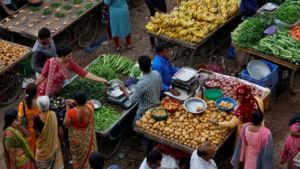
While the price hikes offer a necessary financial lifeline to the OMCs, the collateral damage to the broader economy is undeniable. Diesel is the primary fuel for India’s transport, agriculture, and logistics sectors. An increase of several rupees per litre in just two weeks translates immediately into higher freight charges. This spike in transportation costs is expected to have a domino effect, driving up the retail prices of essential commodities, including fresh vegetables, fruits, groceries, and manufactured goods.
Economists are already warning that the rising fuel costs will stoke consumer price inflation, which could in turn squeeze middle-class households and influence the Reserve Bank of India’s monetary policy decisions in the coming quarters. As the West Asian conflict shows no immediate signs of resolution, international crude prices are likely to remain volatile, indicating that the era of stable fuel prices may be firmly in the rearview mirror.