Massive Legal Victory for Gautam Adani: US Federal Court Dismisses Criminal Bribery and Fraud Charges
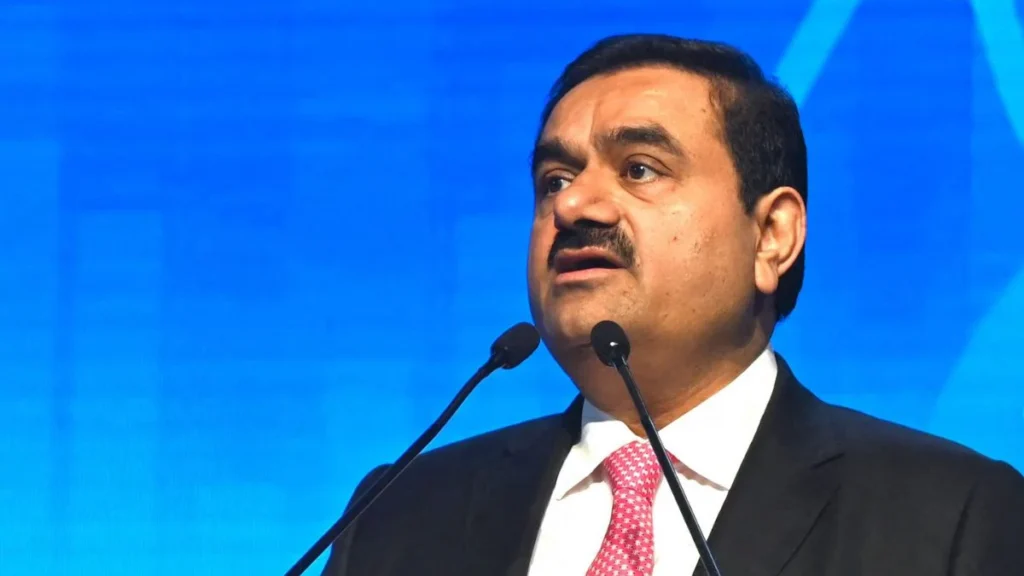
Massive Legal Victory for Gautam Adani: US Federal Court Dismisses Criminal Bribery and Fraud Charges
New York / New Delhi (August 11, 2026): In a monumental legal and corporate victory, Indian billionaire and Adani Group Chairman Gautam Adani has been completely cleared of all criminal charges by a United States federal court. The US District Court for the Eastern District of New York officially granted the Department of Justice’s (DOJ) motion to dismiss the high-profile indictment against Gautam Adani, his nephew Sagar Adani, and former Adani Green Energy CEO Vneet Jaain.
The sweeping dismissal marks the end of a turbulent legal saga that began in November 2024, which had cast a shadow over the conglomerate’s global operations and stock market performance. With the criminal case now permanently closed, the Adani Group is poised to accelerate its international expansion without the looming threat of US federal prosecution.
Here is a detailed breakdown of the court’s decision, the background of the allegations, and the broader implications for the global business landscape.
The Court’s Verdict: Dismissed ‘With Prejudice’
The final order was delivered by US District Judge Nicholas Garaufis, who approved the Justice Department’s request to drop the case under Rule 48(a) of the Federal Rules of Criminal Procedure. Crucially, Judge Garaufis dismissed the indictment “with prejudice.”
In legal terms, a dismissal “with prejudice” is the strongest possible exoneration for the defendants. It means that the case is permanently closed, and the US government is legally barred from ever refiling these specific criminal charges against Gautam Adani, Sagar Adani, or Vneet Jaain in the future. The trio had been facing severe allegations of securities fraud, wire fraud, and conspiracy to commit both, which have now been entirely expunged from their records.
Flashback to 2024: What Were the Allegations?
The legal ordeal began in late 2024 when US federal prosecutors unveiled a bombshell indictment against the Adani executives. The core of the prosecution’s argument alleged that the Adani Group had promised to pay approximately $265 million (roughly ₹2,200 crore) in bribes to Indian government officials. The alleged motive behind these bribes was to secure highly lucrative solar power supply contracts for Adani Green Energy in India.
Furthermore, prosecutors accused the executives of hiding this alleged bribery scheme from US investors and financial institutions, thereby committing securities fraud while raising billions of dollars in capital from international markets. The Adani Group fiercely denied the allegations from day one, maintaining that they operated strictly within the boundaries of international regulatory compliance and the law.
The DOJ’s U-Turn: Why Was the Case Dropped?
The dramatic pivot in the case occurred under the Trump administration’s Justice Department in May 2026. Senior DOJ official Trent McCotter initiated the motion to dismiss, presenting two primary legal arguments that severely weakened the prosecution’s stance.
First, McCotter highlighted significant jurisdictional hurdles. He argued that the alleged bribery and misconduct took place almost entirely within the sovereign borders of India, making it legally and logistically inappropriate for the United States to act as the primary prosecutor.
Second, regarding the fraud charges, the DOJ concluded that the Adani Group’s broad statements to US investors regarding their anti-corruption policies amounted to “inactionable puffery.” In corporate law, this term refers to generalized, promotional statements that no reasonable investor would rely upon as hard factual guarantees when making financial decisions, thus invalidating the core of the securities fraud claim.
A “Highly Unusual” Process: Judge Garaufis Expresses Concern
While Judge Garaufis ultimately granted the dismissal, he did not hold back in criticizing the manner in which the DOJ handled the withdrawal. In his written order, the judge labeled the Justice Department’s process as “highly unusual.”
Garaufis noted that DOJ official Trent McCotter appeared to have reached the decision to drop the charges by consulting extensively with Gautam Adani’s high-powered defense attorneys. Alarmingly, McCotter did not seek input or feedback from the FBI agents and SEC (Securities and Exchange Commission) investigators who had spent years painstakingly building the case.
The $10 Billion Investment Controversy and the Sworn Affidavit
The dismissal also survived intense scrutiny regarding a potential conflict of interest. During the negotiations, reports emerged that Gautam Adani’s legal team had informed the DOJ that if the criminal charges were dropped, the Adani Group was prepared to invest a staggering $10 billion into the United States economy.
This sparked immediate concerns of a quid pro quo—a secret deal trading legal immunity for financial investment. To address this, Judge Garaufis demanded absolute clarity. In response, Gautam Adani submitted a legally binding, sworn affidavit to the court, categorically denying that any secret agreement or unethical bargain had been struck with the US government. After reviewing the affidavit and the government’s official responses, Judge Garaufis was fully satisfied that the $10 billion investment pledge did not improperly influence the dismissal of the case.
Gautam Adani’s Reaction: Faith in the Rule of Law
Following the publication of the court’s decision, Gautam Adani took to the social media platform ‘X’ (formerly Twitter) to express his gratitude and relief.
“I welcome the US court’s decision with absolute humility and deep respect for the judiciary,” Adani wrote. “Through this challenging period, our faith in truth, fairness, and the rule of law remained steadfast. My deepest gratitude to everyone who never lost belief in us, our system, and the capacity of justice.”
SEC Civil Settlements Bring Total Closure
Alongside the dismissal of the criminal case, the Adani executives have also successfully resolved parallel civil proceedings brought by the US Securities and Exchange Commission (SEC).
Without admitting or denying the SEC’s underlying allegations, Gautam Adani agreed to pay a civil settlement of $6 million, while Sagar Adani agreed to a $12 million settlement. In a separate and unrelated matter regarding alleged violations of US sanctions on Iran, Adani Enterprises reached a $275 million settlement with the US Treasury Department.
With both the criminal indictments erased and the civil disputes settled, the Adani Group has effectively cleared its major regulatory hurdles in the United States, paving the way for renewed global investor confidence and unimpeded corporate growth.