Tragic Loss at IIT Bombay: Student Sahil Wakode Dies by Suicide, Leaves Heartbreaking Apology Note to Parents
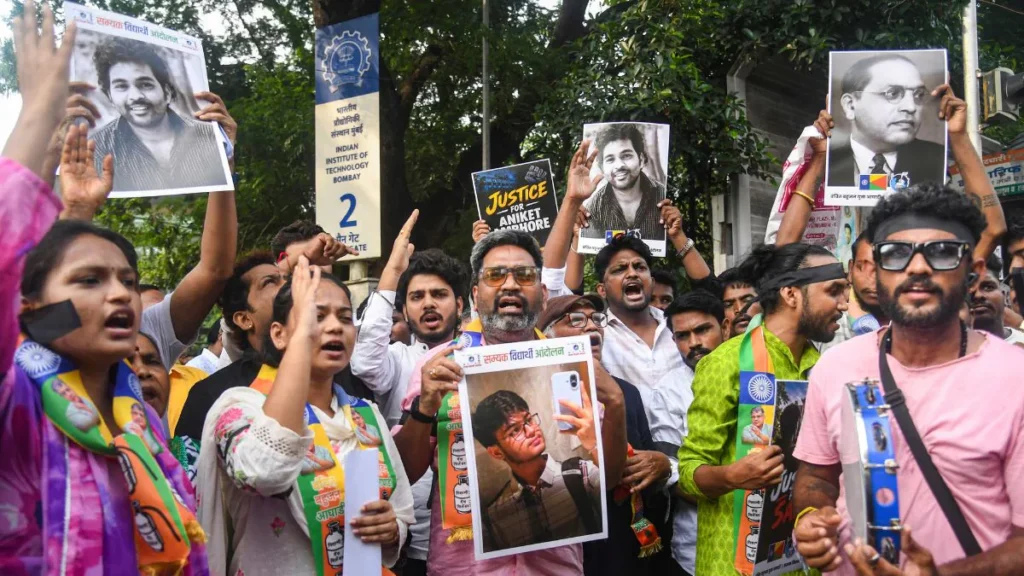
Tragic Loss at IIT Bombay: Student Sahil Wakode Dies by Suicide, Leaves Heartbreaking Apology Note to Parents
The highly competitive and often unforgiving environment of India’s premier engineering institutes has once again come under intense scrutiny following a deeply tragic incident at the Indian Institute of Technology (IIT) Bombay. Sahil Wakode, a promising young student, was found dead in his hostel room on the Powai campus, having reportedly taken his own life. The devastating discovery, coupled with a poignant suicide note in which the student apologized to his parents for failing to meet their expectations, has sent shockwaves through the academic community and reignited urgent debates regarding student mental health, academic pressure, and institutional support systems.
The Incident and the Discovery The unsettling sequence of events unfolded when Sahil Wakode failed to emerge from his hostel room for an extended period and did not respond to repeated phone calls and messages from his peers. Growing increasingly concerned by his unusual absence and prolonged silence, a group of friends approached his room. After receiving no response to repeated knocks, the hostel management and campus security were immediately alerted.
Upon breaking the door open, the authorities discovered Sahil hanging from the ceiling fan. He was swiftly brought down and rushed to the campus medical facility before being transferred to a nearby hospital, where attending doctors pronounced him dead on arrival. The Powai police station was promptly informed, and a team of investigating officers arrived at the scene to commence standard forensic and procedural inquiries.
During the search of the hostel room, police investigators recovered a handwritten suicide note. According to preliminary statements from the police, the note was deeply emotional and absolved everyone else of any blame for his drastic step. Sahil explicitly stated that the decision to end his life was entirely his own. The most heart-rending portion of the letter was directed at his parents, reading as a profound apology for his perceived inadequacies and his inability to live up to the towering expectations placed upon him.
The Crushing Weight of Academic Pressure Sahil’s tragic demise is not an isolated anomaly but rather a grim symptom of a systemic crisis plaguing higher education in India. Gaining admission into an IIT is widely considered the pinnacle of academic achievement for a science student in the country. The journey requires cracking the Joint Entrance Examination (JEE) Advanced, a grueling test that demands years of rigorous, single-minded preparation. However, clearing the exam is often just the beginning of a highly stressful academic marathon.
Once inside these prestigious campuses, students—who are accustomed to being top performers in their respective schools and cities—suddenly find themselves surrounded by thousands of equally brilliant peers. The sudden shift in the competitive landscape, combined with the rigorous ‘relative grading’ system adopted by many such institutions, often results in a massive blow to their self-esteem. A student who has never scored below top marks may suddenly find themselves struggling to maintain average grades.
This toxic cocktail of fierce peer competition, relentless academic rigor, anxiety over future campus placements, and the heavy burden of familial expectations creates a psychological pressure cooker. For many young adults, transitioning to hostel life away from the familial safety net while simultaneously navigating this high-stakes environment becomes an overwhelming and isolating experience. The apology in Sahil’s suicide note tragically underscores the devastating guilt and self-doubt that students internalize when they feel they are falling behind in this relentless race.
Institutional Response and Campus Grief The atmosphere at the IIT Bombay campus has been somber and grief-stricken since the news of Sahil’s passing broke. The institution’s administration released a statement expressing profound sorrow over the untimely loss of a young, bright life and extended its deepest condolences to the grieving family. The administration has assured full cooperation with the ongoing police investigation.
Furthermore, the institute issued an internal advisory urging the student body to seek help if they are experiencing emotional distress. Students have been reminded of the availability of the campus mental health support cells, professional counselors, and faculty advisors designed to help them navigate academic and personal challenges.
The Glaring Gaps in Mental Health Infrastructure Despite the presence of counseling centers, student advocacy groups and educational psychologists point out that the existing mental health infrastructure on premier campuses often falls drastically short of the actual requirement. The counselor-to-student ratio is frequently inadequate, resulting in delayed interventions.
More importantly, there is a pervasive social stigma associated with seeking psychiatric or psychological help. In a hyper-competitive environment, students often fear that visiting a counselor might label them as “weak” or jeopardize their academic and professional prospects. Consequently, many students choose to suffer in silence, masking their depression and anxiety until it reaches a fatal tipping point.
The tragedy of Sahil Wakode highlights the urgent need for a paradigm shift in how academic excellence is pursued and measured in India. Experts argue that institutions must move beyond merely providing reactive counseling and instead foster proactive, holistic environments. This includes restructuring evaluation methods to reduce unnecessary stress, promoting peer-support networks that genuinely function, and continuously sensitizing faculty members to identify early warning signs of depression.
A Wake-Up Call for Society Ultimately, Sahil’s death serves as a haunting wake-up call not just for educational institutions, but for society at large. Parents, educators, and policymakers must critically re-evaluate the narrative that equates a student’s self-worth solely with their academic grades and job placements. The loss of a young life to the fear of failure is a collective failure of the system. Ensuring that students understand that their lives are inherently more valuable than any degree or mark sheet is an immediate and critical necessity.