Festive Relief for Retailers: NPCI Defers 0.4% UPI Merchant Discount Rate Rollout Until After Diwali
Festive Relief for Retailers: NPCI Defers 0.4% UPI Merchant Discount Rate Rollout Until After Diwali
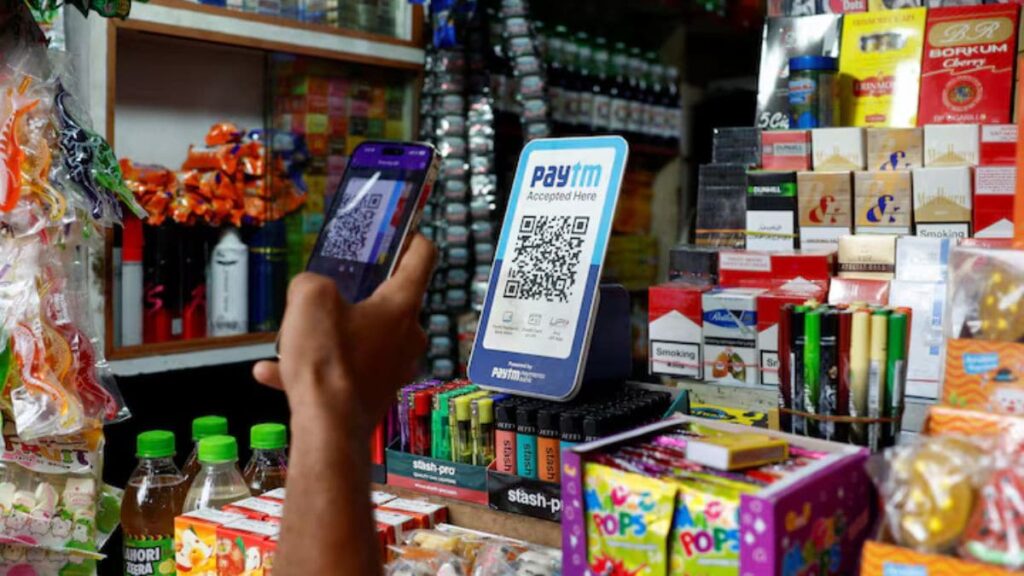
In a significant move that brings a collective sigh of relief to millions of retailers across the country, the National Payments Corporation of India (NPCI) has announced the deferment of the much-debated Merchant Discount Rate (MDR) on select Unified Payments Interface (UPI) transactions. The proposed 0.4 percent fee, which was slated to be levied on certain Person-to-Merchant (P2M) UPI transactions exceeding ₹2,000, will now be implemented only after the conclusion of the Diwali festivities. The decision, taken by the UPI and Services Steering Committee, underscores a strategic pause aimed at preventing any disruption to consumer spending and merchant margins during India’s most critical retail season. A fresh date for the rollout will be notified separately by the governing body in due course.
The Original Framework and Proposed Charges The digital payments ecosystem in India was bracing for a massive shift this October. According to a circular issued by the NPCI last month, a 0.4 percent Merchant Discount Rate was scheduled to come into effect starting October 15, 2026. This charge was specifically targeted at select person-to-merchant (P2M) transactions that crossed the ₹2,000 threshold.
To prevent the fees from becoming exceptionally burdensome for high-value transactions, the NPCI had intelligently instituted a cap. The MDR was capped at a maximum of ₹300 for any single transaction amounting to ₹75,000 or more. It is crucial to understand that the Merchant Discount Rate is a fee that the merchant pays to the payment service provider and the banks for facilitating the digital transaction. It is not directly payable by the retail consumer. However, in the highly competitive Indian retail sector, where profit margins can often be razor-thin, the introduction of a new transaction cost was met with considerable apprehension by the merchant community.
Reasons Behind the Strategic Deferment The timing of the implementation was the primary catalyst for the backlash and subsequent deferment. October and November constitute the peak festive season in India, driven by Navratri, Dussehra, Dhanteras, and culminating with Diwali. This period accounts for a massive chunk of annual retail sales across categories like electronics, apparel, jewelry, and home appliances.
In a statement released on Tuesday, the NPCI explicitly stated, “The UPI and Services Steering Committee today decided that, keeping in mind the festive season, Merchant Discount Rate (MDR) on select Person-to-Merchant (P2M) UPI transactions shall be implemented immediately post Diwali on a date to be notified separately.”
By pushing the rollout beyond Diwali, the government and the NPCI have successfully avoided introducing a new financial friction point at a sensitive moment for domestic consumption. Merchants, particularly small and medium enterprise owners, were concerned that absorbing a 0.4 percent hit on high-ticket festive purchases would eat directly into their seasonal profits. Giving retailers and payment gateway companies additional time allows for a smoother transition, better technological preparation, and an unhindered festive shopping bonanza.
Impact on Consumers and the Retail Ecosystem One of the most critical aspects of this development is the clarification regarding who bears the cost. The general consumer base can breathe easy, as the proposed MDR is strictly applicable to merchants. Everyday UPI users transferring money to friends, family, or paying for routine expenses will not see any deductions or extra charges on their bank accounts.
Furthermore, the scope of the MDR is relatively narrow. Financial analysts and industry experts estimate that approximately 96 percent of all P2M UPI transactions by volume fall well below the ₹2,000 mark. These micro and small transactions—ranging from buying groceries and paying for auto-rickshaws to ordering street food—will remain completely unaffected and free of charge. The MDR primarily targets higher-value discretionary spending, ensuring that the foundational use case of UPI as a tool for financial inclusion and daily micro-payments remains intact.
For retailers, the deferment is a temporary but highly lucrative shield. The festive season often sees the average order value shoot up significantly, easily breaching the ₹2,000 mark as consumers invest in smartphones, home décor, and festive gifting. Delaying the 0.4 percent levy allows merchants to maximize their earnings during this peak consumption window without having to rethink their pricing or discount strategies to offset the MDR costs.
The Broader Debate: Monetizing a Public Good The conversation surrounding the implementation of an MDR on UPI is not new, and it taps into a broader, ongoing debate about the sustainability of India’s digital payments infrastructure. Since its inception, UPI has been positioned as a digital public good. The zero-MDR policy adopted by the government exponentially accelerated its adoption, transforming India into the undisputed global leader in real-time digital payments.
However, banks and payment service providers (PSPs) have long argued that maintaining, upgrading, and securing the massive technological infrastructure required to process billions of UPI transactions every month incurs massive costs. Without a monetization avenue like the MDR, these financial institutions have found it increasingly difficult to sustain operations and invest in innovation. The proposed 0.4 percent fee on high-value transactions was seen as a middle-ground solution—allowing payment companies to earn a legitimate revenue stream while keeping small everyday transactions free for the masses.
Legal Hurdles and Future Implementation Adding another layer of complexity to the rollout is the legal pushback the framework has encountered. The proposed charges have recently faced a legal challenge in the Supreme Court of India, with petitioners raising concerns over the legal and economic implications of altering the zero-MDR mandate on the UPI network. The deferment until after Diwali inadvertently provides the judiciary and all involved stakeholders more time to deliberate on the legal standing and the long-term impact of the fees.
Looking ahead, the NPCI still has to iron out several critical details before the eventual post-Diwali rollout. While the broad stroke of a 0.4 percent fee on transactions above ₹2,000 is known, the NPCI has not yet detailed the specific eligible merchant categories, potential sector-specific exemptions, or the finalized operational guidelines. Certain sectors, such as education, healthcare, and utilities, might see customized MDR structures or complete exemptions to protect the public interest.
Conclusion The NPCI’s decision to defer the UPI MDR implementation until after Diwali is a pragmatic and well-calculated move. It successfully balances the immediate economic priorities of a consumption-driven festive season with the long-term structural needs of the digital payments industry. As consumers prepare to light up their homes and indulge in festive shopping, merchants can operate with full confidence, knowing their margins remain untouched for now. However, as the festive lights dim post-Diwali, the retail sector will have to finally adapt to the new realities of a monetized UPI ecosystem.
Tags: