The Rise of the Pink Economy: How LGBTQIA+ Purchasing Power is Reshaping the Indian Market
The Rise of the Pink Economy: How LGBTQIA+ Purchasing Power is Reshaping the Indian Market
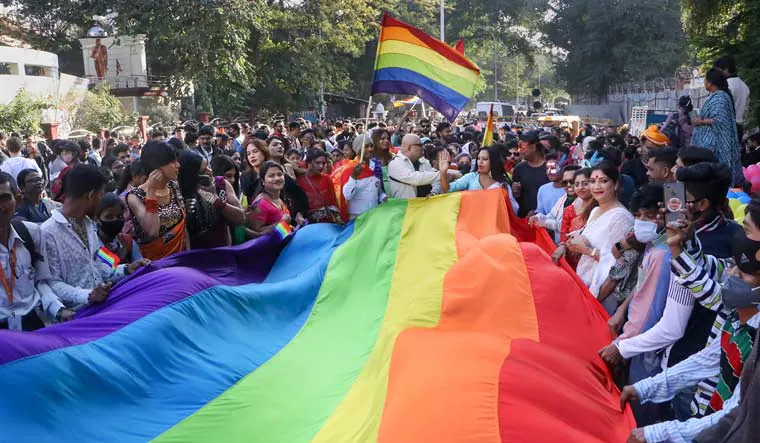
MUMBAI — As India navigates a rapidly evolving socio-cultural landscape, a powerful economic force is fundamentally altering the nation’s consumer market. The “Pink Economy”—the purchasing power and economic footprint of the LGBTQIA+ community—has transitioned from a niche demographic consideration to a mainstream macroeconomic driver. As of June 2026, corporate India is waking up to the staggering potential of “Pink Money,” realizing that inclusivity is not just a moral imperative but a highly lucrative business strategy.
With the LGBTQIA+ community representing an estimated 5% to 8% of India’s vast population, the sheer volume of this consumer base is impossible to ignore. Industry reports now estimate the purchasing power of the Indian LGBTQIA+ community to be well over $150 billion, a figure that is growing exponentially as financial independence and social acceptance rise across the country.
The Magnitude of the Pink Market
For decades, the economic potential of the LGBTQIA+ community in India was largely overlooked, stifled by legal restrictions and societal stigma. However, the historic decriminalization of homosexuality in 2018 acted as a watershed moment, not just for human rights, but for the economy. Today, a highly educated, urban, and dual-income (often with no kids, or DINK) segment of the queer community possesses significant disposable income.
This demographic is characterized by strong brand loyalty. Data from consumer research firms indicates that LGBTQIA+ consumers are 70% more likely to spend their money on brands that actively support queer rights and demonstrate genuine inclusivity in their business practices. Consequently, brands are fiercely competing to capture this market, shifting from tokenistic “Pride Month” campaigns to year-round, targeted consumer engagement.
Key Sectors Experiencing the Pink Boom
The ripple effects of LGBTQIA+ spending are being felt across a multitude of industries. Several key sectors are emerging as the primary beneficiaries of this economic shift:
- Financial Services and Insurance: Historically, the queer community faced immense hurdles in securing joint banking, loans, or insurance. Today, major Indian banks and fintech startups are rolling out tailored financial products. We are witnessing a surge in banks allowing the opening of joint accounts for same-sex partners, and insurance companies offering comprehensive health covers that include gender-affirmation surgeries and extend family floater plans to same-sex partners.
- Travel and Hospitality: “Pink Tourism” is one of the fastest-growing segments in the travel industry. Queer travelers prioritize safety, non-discrimination, and welcoming environments. Consequently, leading hotel chains and boutique resorts are undergoing intensive sensitization training to become verified “LGBTQIA+ safe spaces.” Specialized travel agencies curating domestic and international itineraries exclusively for queer travelers are seeing year-on-year revenue growth of over 40%.
- Fashion, Beauty, and Lifestyle: The strict binaries of men’s and women’s fashion are blurring. Top Indian retail brands and homegrown D2C (Direct-to-Consumer) labels are launching gender-neutral clothing lines. Similarly, the beauty and cosmetics industry has pivoted to inclusive marketing, featuring queer models and creating products that cater to a spectrum of gender identities.
- Real Estate: Housing discrimination remains a reality for many queer individuals. In response, a new wave of progressive real estate developers and rental platforms are actively marketing to the LGBTQIA+ community, guaranteeing discrimination-free leasing and purchasing processes, thereby tapping into a highly motivated buyer base.
Moving Beyond “Rainbow Washing”
As the Pink Economy expands, so does the scrutiny from queer consumers. The community is increasingly vigilant against “rainbow washing”—the practice where companies temporarily change their logos to rainbow colors during Pride Month but fail to implement meaningful, inclusive policies year-round.
Modern consumers are demanding tangible action. They are looking at corporate boardrooms, hiring practices, and workplace environments. Companies that boast robust Employee Resource Groups (ERGs), comprehensive anti-discrimination policies, and equal benefits for LGBTQIA+ employees are the ones earning the coveted “Pink Rupee.” Corporate India is learning that authentic external marketing must be backed by genuine internal inclusivity.
The Socio-Economic Intersection and Future Outlook
The rise of the Pink Economy is not merely a capitalist phenomenon; it is a catalyst for profound social change. Economic visibility often precedes broader societal and political acceptance. As queer individuals become recognized as a formidable consumer block and a vital part of the workforce, the pressure mounts on both society and the state to grant full equitable rights, including marriage equality and broader anti-discrimination laws.
However, challenges remain. The current boom in the Pink Economy is heavily skewed towards urban, English-speaking, and upper-middle-class segments of the community. Millions of queer individuals in rural and semi-urban India still face severe economic marginalization, lacking access to basic education, employment, and healthcare.
For the Pink Economy to reach its true, equitable potential, corporate initiatives must extend beyond premium consumer products and focus on grassroots employment generation, skill development, and inclusive hiring practices that uplift the most vulnerable intersections of the LGBTQIA+ spectrum, including the transgender and hijra communities.
As India moves forward in 2026, the blueprint is clear: the integration of the LGBTQIA+ community into the formal economic fold is a non-negotiable component of the nation’s growth story. The Pink Economy is a testament to the fact that diversity is not just a metric to be tracked, but an essential driver of innovation, market expansion, and national prosperity.