Indian-Flagged Vessel Sinks in Red Sea After Projectile Attack; All 13 Indian Crew Members Rescued Safely
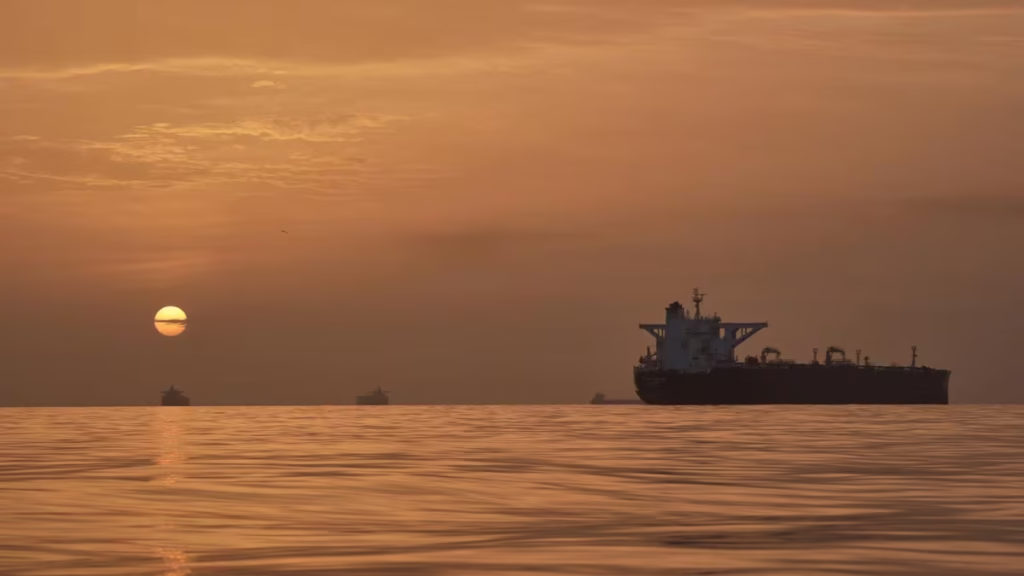
Indian-Flagged Vessel Sinks in Red Sea After Projectile Attack; All 13 Indian Crew Members Rescued Safely
The volatile waters of the Red Sea have witnessed yet another alarming maritime incident as the Indian-flagged commercial vessel, MSV Faize Noore Oliya, capsized and sank after being struck by a projectile off the coast of Yemen. In a massive relief amidst the escalating geopolitical crisis in the region, all 14 crew members on board—including 13 Indian nationals—were successfully rescued and moved to safety.
This latest attack underscores the severe and ongoing risks faced by commercial shipping in one of the world’s most critical maritime corridors. The Indian government has strongly condemned the assault, calling for immediate intervention to secure international waterways and protect global commerce from militant disruptions.
The Incident: MSV Faize Noore Oliya Under Fire
According to official reports, the MSV Faize Noore Oliya was navigating through the Red Sea near the Yemeni coastline when it was targeted by a projectile. While the exact nature of the weapon—whether a drone, a missile, or another form of explosive ordnance—has not been explicitly detailed, the impact was devastating enough to cause the vessel to capsize and eventually sink.
The Red Sea has become a highly militarized and dangerous zone due to persistent attacks by Yemen’s Houthi rebels, who have been targeting commercial vessels in the region for months. The sinking of the MSV Faize Noore Oliya is a stark reminder of the collateral damage inflicted upon international seafarers who are simply carrying out global trade operations.
Swift Rescue Operations by Yemeni Coast Guard
Despite the catastrophic loss of the vessel, a swift and coordinated rescue operation ensured that no lives were lost. The Yemeni Coast Guard played a pivotal role in the immediate aftermath of the strike, successfully rescuing all 14 crew members from the sinking ship.
The rescued seafarers were safely transported to the Port of Mokha in Yemen. Given the traumatic nature of the incident, ensuring the physical and psychological well-being of the crew has been the immediate priority for authorities. The successful extraction of the crew in a high-conflict zone highlights the critical importance of regional coast guard forces in mitigating maritime disasters.
India’s Strong Diplomatic Response and Condemnation
The Government of India has taken a strong stance against the attack, reflecting its zero-tolerance policy toward threats to its citizens and maritime assets. The Ministry of External Affairs (MEA) issued a robust statement condemning the assault and categorizing the continuing attacks on commercial vessels in the Red Sea as “deeply worrisome.”
The MEA confirmed the safety of the Indian nationals, stating, “All 13 Indian nationals have been rescued. Our Embassy in Riyadh is closely monitoring the situation and proactively coordinating with the Yemeni authorities to ensure the safety and security of the crew.” Furthermore, the Indian government expressed its deep gratitude to the Yemeni authorities and the Coast Guard for their prompt and life-saving rescue efforts.
Highlighting the need for international maritime security, the MEA strongly urged that such aggressive incidents cease immediately. “The targeting of commercial shipping in the region must end, and free and unimpeded navigation and commerce through the international waterways in the region, in keeping with international law, must be restored at the earliest,” the ministry asserted.
Actions by the Ministry of Ports, Shipping and Waterways
Simultaneously, India’s domestic maritime authorities swung into action. Union Shipping Minister Sarbananda Sonowal took to the social media platform X (formerly Twitter) to confirm the rescue and outline the government’s next steps.
Sonowal emphasized that the welfare of Indian seafarers is of paramount importance. “I have instructed the Director General of Maritime Administration to take immediate steps, in coordination with all agencies, to ensure the safety and security of Indian seafarers in the region and provide all necessary assistance to the rescued crew,” he stated. The administration is currently working on the logistics of repatriating the rescued Indian nationals and providing them with any necessary medical and psychological support.
The Broader Geopolitical Crisis in the Red Sea
The sinking of the Indian-flagged vessel cannot be viewed in isolation; it is a direct consequence of a larger, highly complex geopolitical conflict spilling over into international trade routes. Shipping traffic through the Red Sea, which connects the Mediterranean Sea to the Indian Ocean via the Suez Canal, has faced repeated and severe disruptions due to systematic attacks by Houthi militants based in Yemen.
The Houthis have strategically utilized their geographic position to blockade and harass commercial shipping, primarily aiming to disrupt Saudi exports and pressure international actors. This regional instability is deeply intertwined with the broader US-Iran proxy conflicts playing out in the Middle East. The escalating violence has effectively expanded the maritime chokepoints, adding the Red Sea to a list of high-risk zones that already includes the Strait of Hormuz, where global oil supplies have historically faced bottlenecks.
The Economic Toll on Global Maritime Trade
The Red Sea accounts for approximately 12% to 15% of global trade, acting as the primary artery for goods moving between Asia and Europe. The relentless projectile and drone attacks have forced major international shipping companies to reroute their vessels around the Cape of Good Hope in Africa. This diversion adds thousands of nautical miles to the journey, significantly increasing fuel costs, insurance premiums, and transit times.
For a rapidly growing economy like India, which relies heavily on maritime trade for both its exports and energy imports, ensuring the safety of the Red Sea and the Arabian Sea is critical. The Indian Navy has previously deployed frontline destroyers and reconnaissance aircraft in the region to deter piracy and militant attacks, demonstrating New Delhi’s commitment to being a net security provider in the Indian Ocean Region.
Looking Ahead: The Need for Safe Passage
As the crew of the MSV Faize Noore Oliya awaits their return to India, the incident leaves pressing questions for the international community. The safety of civilian seafarers cannot be held hostage to regional geopolitical skirmishes. India’s call for the restoration of “free and unimpeded navigation” under international law is a sentiment echoed by nations worldwide that rely on these vital shipping lanes.
Until a diplomatic or security resolution is reached to pacify the Red Sea corridor, commercial vessels will continue to navigate under the shadow of sudden strikes, making maritime security one of the most urgent global challenges of the current decade.