Former Actress Recalls ‘Torturous’ Threesome with Harvey Weinstein During Retrial Testimony: “I Had a Breakdown”
Former Actress Recalls ‘Torturous’ Threesome with Harvey Weinstein During Retrial Testimony: "I Had a Breakdown"
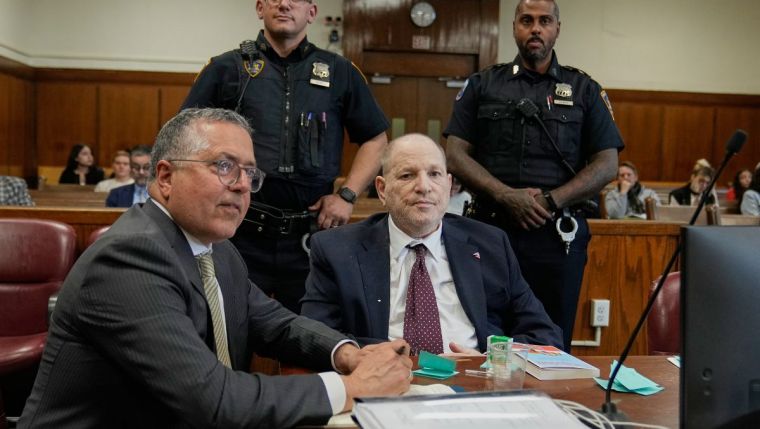
The legal saga of disgraced Hollywood mogul Harvey Weinstein took another harrowing turn in a New York courtroom on Wednesday, April 29, 2026. As the retrial of the former film producer continues to dominate headlines, a former actress and key witness delivered a gut-wrenching testimony that provided a window into the alleged systemic abuse and psychological manipulation that defined Weinstein’s reign of terror in the film industry.
Jessica Mann, whose allegations formed a cornerstone of the original 2020 conviction that was recently overturned on technical grounds, took the stand to recount an incident she described as a “torturous” forced sexual encounter involving a third party. Her testimony, marked by visible emotional distress, has reignited the global conversation surrounding consent, power dynamics in Hollywood, and the grueling nature of the judicial process for survivors of sexual assault.
A Testimony of Trauma and “Mental Breakdown”
Appearing before a jury in Manhattan, Mann detailed a specific encounter in a hotel room that she claims deviated from any semblance of consent. According to her testimony, Weinstein allegedly orchestrated a “threesome” dynamic that Mann described not as a sexual preference, but as a calculated method of degradation and control.
“I felt like an object, a piece of meat being moved around for his gratification,” Mann told the court, her voice trembling. She explained that during the encounter, she suffered a “complete mental breakdown,” describing a sensation of dissociation where she felt detached from her own body to survive the trauma of the moment. “I wasn’t there anymore. My brain just shut off because it couldn’t process the violation happening in real-time.”
The testimony focused heavily on the psychological aftermath of the event. Mann described how the incident led to years of clinical depression, anxiety, and a fundamental loss of self-identity. This narrative of a “breakdown” is central to the prosecution’s argument that Weinstein used his immense professional stature to trap young, aspiring actresses in situations where they felt “consenting” was the only way to avoid professional or physical ruin.
The Defense’s Strategy: Challenging Credibility through Context
As has been the case throughout Weinstein’s various legal battles, the defense team, led by a roster of high-profile litigators, moved quickly to undermine Mann’s credibility. Their strategy centered on the “consensual nature” of the long-term relationship between Mann and Weinstein, which spanned several years.
The defense presented a series of emails and personal notes written by Mann to Weinstein following the alleged assault. These communications, which included professional requests and friendly greetings, were used to suggest that the relationship was a complicated but voluntary “transactional” romance.
“The prosecution wants you to believe this was a monster and a victim,” the defense argued during cross-examination. “But the records show a woman who was actively engaging with, seeking out, and maintaining a relationship with a powerful man to further her own career.”
Legal experts note that this “victim-blaming” narrative is a common defense tactic in sexual assault cases involving a history of acquaintance. However, the prosecution countered by explaining the “grooming” process, where perpetrators alternate between kindness and abuse to keep victims confused and compliant—a phenomenon often referred to as “trauma bonding.”
Why This Retrial Matters in 2026
The 2026 retrial comes at a precarious moment for the #MeToo movement. After the New York Court of Appeals overturned Weinstein’s initial conviction in early 2024—citing that the judge had unfairly allowed “Molineux” witnesses (women whose allegations weren’t part of the specific charges) to testify—the legal community has been divided.
This current trial is seen as a “do-over” with stricter evidentiary rules. For survivors, it represents a second chance at justice; for critics, it is a test of whether the legal system can handle the nuances of sexual assault without compromising the constitutional rights of the defendant.
The 2026 proceedings are being watched globally, as they will likely set the precedent for how “prior bad acts” testimony is handled in future sexual misconduct trials involving high-profile figures.
The Toll of the Witness Stand
The intensity of the trial reached a breaking point when the proceedings had to be adjourned early on Thursday. Mann, visibly exhausted and struggling to breathe, informed the judge that she had been unable to sleep and was experiencing severe physical symptoms of PTSD due to the aggressive cross-examination.
“It is a re-traumatization,” said a legal analyst following the case. “We are asking survivors to relive their worst nightmares in a room full of strangers while being called a liar by world-class attorneys. The toll this takes on a person’s mental health is immeasurable.”
The Global Reaction
The hashtag #WeinsteinRetrial has trended across social media platforms, with advocates for survivors expressing outrage at the defense’s tactics. Activists argue that the focus on Mann’s “friendly” emails ignores the reality of how power works in Hollywood, where a single “no” to a mogul like Weinstein could end a career before it began.
Conversely, some legal commentators suggest that the case highlights the necessity of a “fair trial,” asserting that even the most loathed figures in society deserve a defense that scrutinizes the evidence presented against them.
What’s Next?
The trial is expected to continue for several more weeks, with additional witnesses scheduled to testify regarding Weinstein’s behavior in hotel rooms across New York and Los Angeles. Despite the overturning of his New York conviction, Weinstein remains incarcerated due to a separate 16-year sentence handed down in Los Angeles in 2023.
As Jessica Mann concludes her testimony, the jury is left with a starkly different portrait of the same events: one of a calculated sexual predator who broke a young woman’s spirit, and another of a consensual, albeit messy, Hollywood power dynamic. The verdict will ultimately hinge on whether the jury believes that “consent” can truly exist in the shadow of such overwhelming professional and personal intimidation.