“Extremely Severe Alert”: India Successfully Tests Advanced Mobile-Based Disaster Communication System to Revolutionize Emergency Response
"Extremely Severe Alert": India Successfully Tests Advanced Mobile-Based Disaster Communication System to Revolutionize Emergency Response
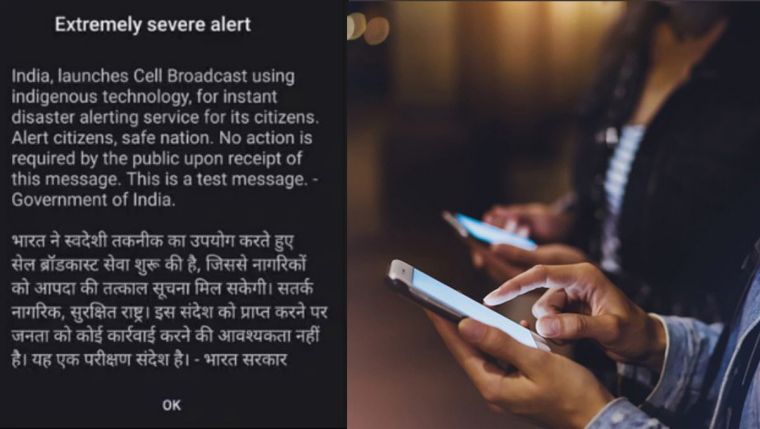
On Saturday, May 2, 2026, millions of smartphone users across various regions in India experienced a momentary jolt as their devices vibrated intensely, accompanied by a loud, piercing siren and a flashing text box. The notification, labeled as an “Extremely Severe Alert,” was not a cause for panic but a critical milestone in India’s journey toward digital-first disaster resilience.
The Government of India, in collaboration with the National Disaster Management Authority (NDMA) and the Department of Telecommunications (DoT), officially conducted a large-scale pan-India test of its integrated Mobile-Based Disaster Communication System. This trial aimed to evaluate the efficiency and reach of the Cell Broadcast Alert System (CBAS), designed to safeguard citizens during natural calamities such as cyclones, floods, and earthquakes.
The Mechanics of the “Extremely Severe Alert”
The alert system utilized state-of-the-art Cell Broadcast Technology, which differs significantly from traditional SMS. While standard text messages can get delayed due to network congestion during emergencies, cell broadcasting allows the government to send a common message to all mobile devices within a specific geographical area simultaneously.
The alert appeared as a pop-up window on mobile screens, overriding silent modes and active applications. The message clearly stated: “This is a TEST MESSAGE sent through the Cell Broadcasting System by the Department of Telecommunications, Government of India. Please ignore this message as no action is required from your end.”
By testing the “Extremely Severe” category, authorities were able to verify if the system could successfully trigger the highest level of auditory and haptic feedback on devices, ensuring that even users who are asleep or in noisy environments are alerted immediately.
Why India Needs an Integrated Alert System
India’s vast and diverse geography makes it highly susceptible to a variety of natural disasters. From the cyclone-prone coasts of Odisha and Gujarat to the seismic zones of the Himalayas and the recurring floods in Bihar and Assam, the need for a split-second communication tool has never been greater.
Historically, disaster warnings were disseminated through television, radio, and local sirens. However, with over 1.2 billion mobile phone users in the country, the mobile device has become the most effective tool for real-time life-saving communication. This new system aims to bridge the gap between disaster detection and public action, potentially saving thousands of lives by providing precious minutes of lead time for evacuation.
Key Objectives of the May 2nd Test
The Department of Telecommunications outlined several technical objectives for this weekend’s trial:
- Network Penetration: Assessing how effectively the signal reaches remote rural areas versus densely populated urban centers.
- Device Compatibility: Ensuring the alert functions across various operating systems (Android, iOS, and feature phones) and different hardware manufacturers.
- Latency Measurement: Calculating the time taken from the moment the “send” button is pressed at the control center to the moment the phone vibrates.
- Language Integration: Testing the system’s ability to deliver alerts in regional languages to ensure inclusivity for non-English and non-Hindi speakers.
Collaboration Between NDMA and Telecom Service Providers (TSPs)
The success of the test relied heavily on the seamless integration between the NDMA’s Common Alerting Protocol (CAP) platform and the infrastructure of major telecom players like Reliance Jio, Bharti Airtel, and Vodafone Idea.
The CAP platform acts as a centralized “nerve center” where disaster agencies (like the IMD or INCOIS) feed data. Once a threat is validated, the NDMA generates an alert which is then broadcasted by the telecom towers in the affected polygon. This ensures that only people in the direct path of a storm or earthquake receive the notification, preventing mass panic in unaffected regions.
The Move Toward a “Zero Casualty” Target
The Indian government has been vocal about its “Zero Casualty” policy regarding predictable disasters like cyclones. The implementation of this mobile-based system is a direct response to international frameworks like the Sendai Framework for Disaster Risk Reduction.
By automating these alerts, India joins an elite group of nations—including the United States (WEA system), Japan (J-Alert), and Canada—that have established sophisticated wireless emergency protocols. In the 2026 context, this move is also seen as a preparation for the increasing frequency of extreme weather events driven by climate change.
Public Reaction and the “Panic Factor”
While the government issued prior press releases and social media advertisements regarding the test, many citizens were still caught off guard by the intensity of the alert. Social media platforms were flooded with screenshots of the “Extremely Severe Alert,” with the hashtag #MobileAlertIndia trending within minutes.
“It was startling, but in a good way,” said one user in New Delhi. “If this were a real earthquake, that sound would definitely make me run for cover.”
Psychologists and disaster experts emphasize that while the initial shock might be jarring, “alert fatigue” or “unnecessary panic” can be managed through regular testing and public education. The government has hinted that such tests will occur periodically to ensure the system remains robust as 5G and 6G technologies evolve.
Future Roadmap: Beyond Natural Disasters
While currently focused on weather and geological events, the Mobile-Based Disaster Communication System has the potential for broader applications, including:
- Public Health Emergencies: Immediate notification of disease outbreaks or lockdown measures.
- Law Enforcement: Alerts regarding missing children (similar to Amber Alerts) or active security threats.
- Industrial Accidents: Warning residents near chemical plants or nuclear facilities in case of a leak.