CJP Founder Abhijeet Dipke Alleges Instagram Crackdown by Centre, Says Thousands of Posts Being Removed Daily
CJP Founder Abhijeet Dipke Alleges Instagram Crackdown by Centre, Says Thousands of Posts Being Removed Daily
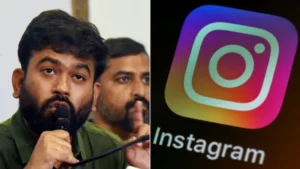
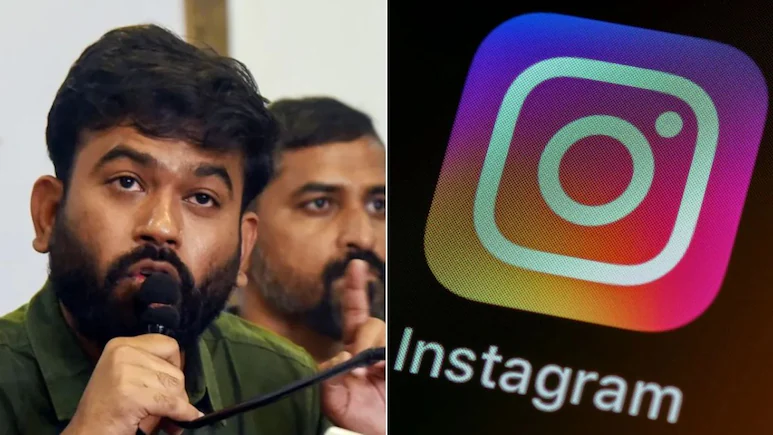
New Delhi: Cockroach Janta Party (CJP) founder Abhijeet Dipke on Wednesday accused the Centre of orchestrating a crackdown on critical content on Instagram. He claimed that thousands of posts and accounts are being taken down or restricted every day. The allegation comes as several satirists, activists and independent media organisations have also complained that their Instagram posts were removed or restricted.
What Dipke Said
In a post on X on Wednesday morning, Dipke said the Instagram crackdown “is not going to work.” According to him, the government is removing thousands of posts and accounts daily but is missing a basic point. He argued that Instagram is just a platform where people are raising questions, and that the reasons behind those questions lie far beyond social media. Taking down accounts, he said, will not make those concerns disappear, and the censorship could deepen distrust among the very people the government is meant to answer to.
Ranka’s Claim on Restrictions
CJP leader Ashutosh Ranka made a similar claim in a post on X on October 26. He alleged that thousands of Instagram accounts have been restricted in India and that lakhs of videos have been removed. He also criticised Meta, the parent company of Instagram, over the reported actions. The figures cited by CJP leaders have not been independently verified.
LiveLaw Reel Among Content Removed
Legal news website LiveLaw reported that an Instagram reel on its official page about the Election Commission of India’s affidavit in the Supreme Court was taken down. According to reports, Instagram showed a notice saying it had received a legal request to block the content. A screenshot shared by Dipke carried a similar message, indicating the content was restricted in compliance with a legal requirement under India’s IT Act.
The Legal Angle: Section 69A
Complaints of this kind often involve Section 69A of the Information Technology Act, 2000. The provision allows the Union government to direct the blocking of public access to online information on grounds such as national security, public order and sovereignty. Activists and political groups have objected to accounts being withheld and posts being removed under this provision.
What the Data Shows
Digital rights group SFLC.in recorded 181 instances of restricted posts, pages and accounts in India between October 1 and October 18, involving a total of 382 items. That is far below the “thousands” and “lakhs” cited by CJP leaders, although the two sets of figures cover different scopes and time periods and cannot be compared directly. Reports also note that the Ministry of Electronics and Information Technology issued an advisory to Meta on October 10 on how Facebook and Instagram recommend content.
Delhi High Court Hearing on November 6
The issue has also reached the courts. The Delhi High Court has asked the Centre to respond over the blocking of the “Bring Back Ballot” handle. Counsel for the petitioners told the court that the account became unavailable in India on October 10, the day of a protest at Jantar Mantar. The petition says the account displayed a message saying it was “not available in India.” The matter is listed for hearing on November 6.
A Pattern of Clashes Over CJP’s Online Presence
CJP was founded on May 16, 2026, and describes itself as a satirical platform that gives young Indians a voice outside mainstream politics. Its social media accounts have been at the centre of several disputes this year:
- May 21: The party’s X account was withheld in India.
- May 23: Dipke said CJP’s Instagram account and his personal account had been hacked and the group’s website taken down.
- July 7: The Delhi High Court ordered the immediate unblocking of CJP’s original X account, @CJP_2029.
- July 22: CJP’s Instagram account briefly showed as unavailable in India following a legal request, and was later restored.
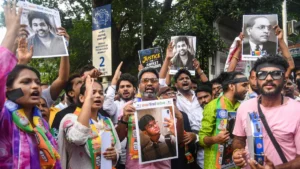
In October, CJP announced a protest at Jantar Mantar demanding the resignation of the Chief Election Commissioner. The run-up to that protest saw political exchanges over security arrangements and restrictions in the capital.
Government and Meta Response
In the reports reviewed, neither the Centre nor Meta had issued a detailed official response to Dipke’s latest allegations. Coverage also points out that there is no independently verified evidence establishing the scale of the alleged crackdown. It is likewise unclear whether every restriction cited by creators and organisations was ordered by the government, or whether some were applied under the platform’s own policies.
Why It Matters
The dispute puts a spotlight on how restriction requests are made and carried out. Digital rights advocates have long argued that blocking orders should be transparent and proportionate, and that platforms should tell users clearly why content was removed. CJP has also argued in court that its content is satire protected as free speech, and that if any specific post was objectionable, it could have been blocked individually rather than restricting an entire account.
What Next
All eyes now turn to the November 6 hearing in the Delhi High Court, where the Centre is expected to explain the blocking of the handle. Any response from the government or Meta on the wider allegations will also be closely watched. Until then, the claims about the number of posts removed remain contested and unverified.