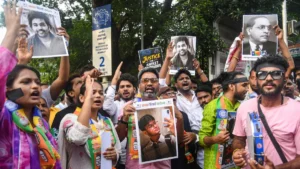
Tragedy Strikes Bihar: 7 Dead, Over 12 Injured in Fatal Stampede at Lakhisarai’s Ashok Dham Temple During Sawan

Tragedy Strikes Bihar: 7 Dead, Over 12 Injured in Fatal Stampede at Lakhisarai’s Ashok Dham Temple During Sawan
LAKHISARAI, BIHAR — A morning dedicated to worship and spiritual devotion turned into a scene of unimaginable heartbreak on Monday, August 17, 2026. At least seven women devotees lost their lives, and more than a dozen others sustained severe injuries following a massive stampede at the renowned Ashok Dham Temple in Bihar’s Lakhisarai district. The chaotic incident unfolded as tens of thousands of worshippers gathered to perform Jalabhishek (a water-offering ritual) on the auspicious third Monday (Somwari) of the holy month of Sawan.
The Trigger: What Led to the Fatal Stampede?
The holy month of Shravan (or Sawan) consistently draws millions of devotees to Lord Shiva temples across India, but the swelling crowds on this particular morning proved to be unprecedented. According to local authorities and eyewitness accounts, the temple grounds were already operating well beyond capacity when the situation rapidly deteriorated between 6:30 AM and 6:45 AM.
Two local passenger trains arrived simultaneously at the nearby Ashok Dham railway station, suddenly discharging an overwhelming number of devotees onto the main pathway leading to the shrine. The sudden influx placed immense pressure on the temple’s queue management system.
Eyewitnesses reported a horrifying sequence of events:
- Barricade Collapse: The sheer force of the surging crowd caused a primary wooden and metal barricade on the women’s side of the queue to snap and give way.
- Fatal Rumors: Simultaneously, a rumor rapidly spread through the tightly packed crowd that a nearby electric pole had collapsed and a live wire had fallen among the worshippers.
- The Crush: Panic ensued instantly. Devotees, desperate to escape perceived electrocution, began rushing in multiple directions. In the ensuing chaos, several women lost their footing, leading to a deadly crush where victims were trapped beneath the fleeing crowd.
“There were women standing in a queue. Around 10-12 women pushed their way in and started pushing us. We fell, and around 20-25 women fell on top of one another,” a traumatized survivor recounted to local media. “Many fainted after getting trapped under the crowd. This happened because there was a huge rush.”
Swift Rescue Operations and Medical Response
As the stampede unfolded, fellow devotees and local residents became the immediate first responders, pulling unconscious victims from the crush before the police and district administration could fully intervene.
Sub-Divisional Police Officer (SDPO) Shivam Kumar, alongside heavily deployed police personnel, rushed to the temple premises to initiate official rescue operations and manage the resulting chaos. The injured were immediately rushed to the Lakhisarai Sadar (Town) Hospital.
Due to the severity of the crushing injuries and asphyxiation, authorities confirmed that several critically injured patients were referred to the Patna Medical College and Hospital (PMCH) in the state capital for advanced, life-saving treatment. The temple premises were temporarily secured by law enforcement to prevent any secondary surges, though the situation remained tense throughout the morning.
Official Statements and Government Action
The local administration has pointed toward the sudden influx of the train passengers as the tipping point for the tragedy. Lakhisarai District Magistrate Shailendra Kumar addressed the press, stating:
“Around 6:30-6:45 am, two trains came here, which added to the crowd in an unprecedented manner. Arrangements were made as we had anticipated the crowd. We then came to know that the barricading broke on one side… and people fell on each other. We rushed 10-15 people here immediately.”
Regarding the electrical wire rumor, SDPO Shivam Kumar noted that an investigation is currently underway to determine the exact sequence of events. “It is being said that an electric pole fell there… which led to a stampede-like situation. We can tell you the exact reason only after verifying everything,” he stated.
At the state level, Bihar Chief Minister Samrat Choudhary expressed profound grief over the incident. Taking to the social media platform X (formerly Twitter), the Chief Minister wrote:
“The news of the deaths of devotees in the accident at Ashok Dham is extremely tragic and heart-wrenching… Necessary instructions have been issued to the administration for the proper and expeditious treatment of the injured.”
Crowd Management Challenges During Sawan
The Ashok Dham temple tragedy has once again spotlighted the severe infrastructural and administrative challenges of managing religious tourism in India. During the month of Sawan, devotees—often known as Kanwariyas—travel hundreds of kilometers on foot to offer holy river water to Lord Shiva.
The third Monday of Sawan is traditionally considered one of the most auspicious days of the month, guaranteeing maximum footfall. Despite administrative anticipation of heavy crowds, the infrastructural bottlenecks at the Ashok Dham temple approach road proved woefully inadequate for the sudden spike in visitors.
Critics and local leaders are now questioning whether sufficient crowd control mechanisms, such as staggered entry gates, reinforced steel barricading, and adequate emergency medical kiosks, were adequately deployed. The rumor of the fallen electric wire also highlights the pressing need for reliable public address systems to communicate directly with crowds to prevent panic-induced stampedes.
Ashok Dham Temple: A Sacred Shrine Under Scrutiny
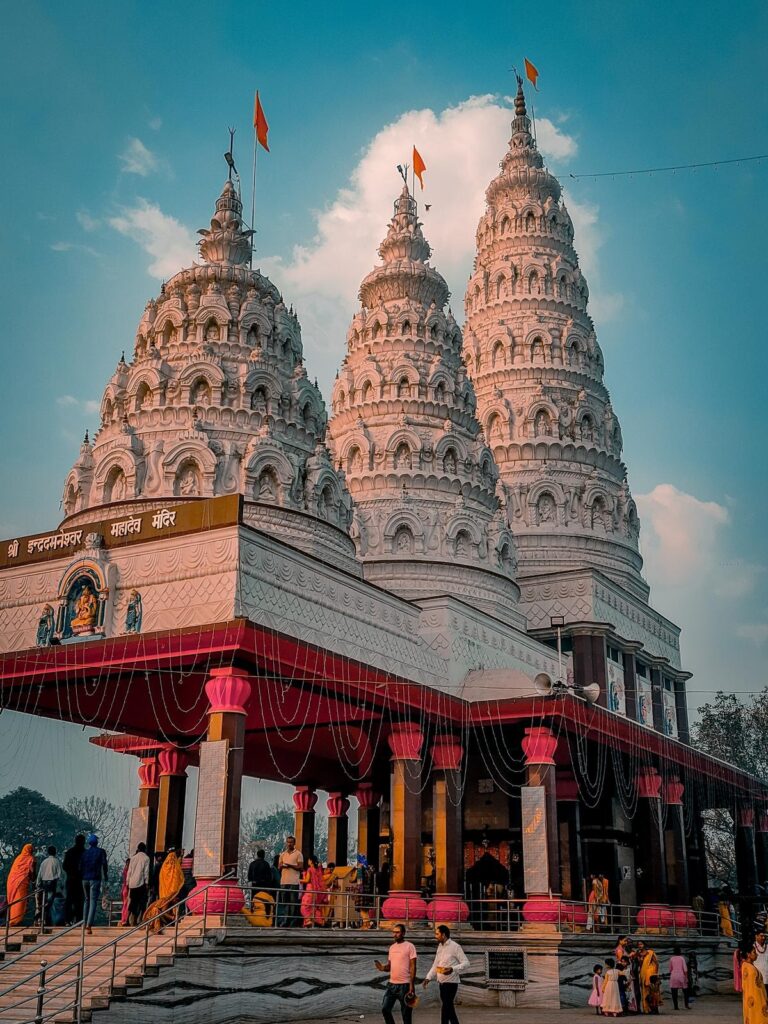
Known formally as the Indradamneshwar Mahadev Mandir, Ashok Dham is a sprawling temple complex located in Lakhisarai, Bihar. It holds immense historical and spiritual significance for Hindus in eastern India. The temple is famous for its massive Shivalinga, which was reportedly unearthed in 1977 by a young boy named Ashok—after whom the temple is colloquially named.
Over the decades, the temple has grown from a humble local shrine into a massive pilgrimage site under the management of the Shri Indradamneshwar Mahadev Mandir Trust. While the trust has heavily invested in expanding the temple architecture, Monday’s fatal incident underscores a stark reality: the infrastructural capacity to handle modern, massive-scale religious gatherings has not kept pace with the shrine’s growing popularity.
A Call for Lasting Solutions
As the families of the seven deceased women mourn their devastating loss, the Lakhisarai stampede serves as a grim reminder of the fragile line between spiritual devotion and infrastructural disaster. Moving forward, a high-level inquiry is expected to probe the lapses in crowd management and the structural integrity of the temple’s queuing systems. Until comprehensive safety protocols and robust crowd-control infrastructure are mandated across major Indian shrines, the threat of such avoidable tragedies will continue to loom over the country’s most vibrant religious festivals.