Explained: How the SHANTI Act is Transforming India’s Nuclear Energy Landscape
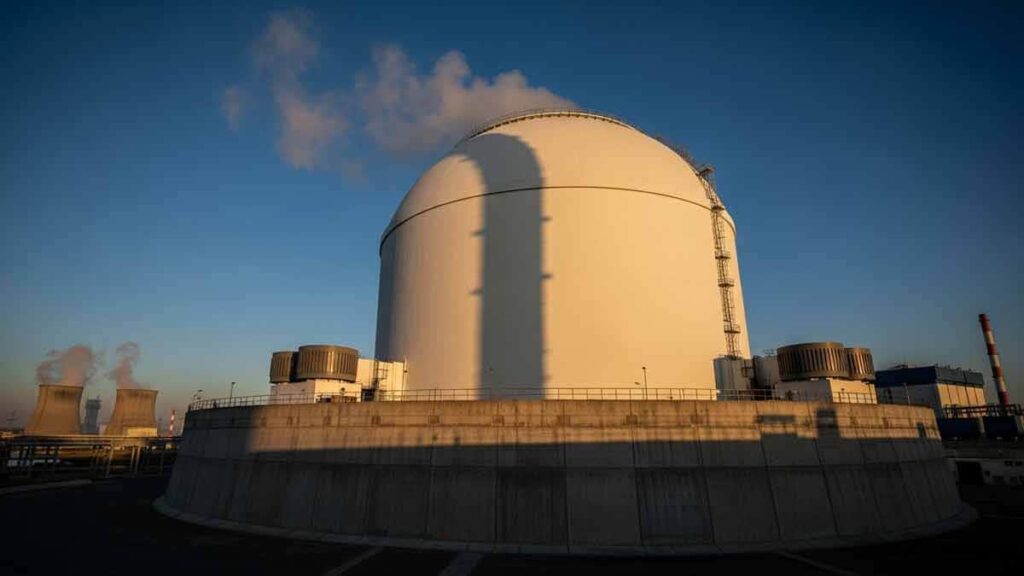
Explained: How the SHANTI Act is Transforming India's Nuclear Energy Landscape
NEW DELHI — India is standing on the brink of a historic energy revolution. As the nation races toward its ambitious goal of achieving a 100 GW nuclear power capacity by 2047, the recently enacted SHANTI Act (Sustainable Harnessing and Advancement of Nuclear Energy for Transforming India) is at the heart of this massive transition.
Following Prime Minister Narendra Modi’s Independence Day address in August 2026, where he emphasized the critical role of nuclear energy in India’s journey toward self-reliance and energy security, the Department of Atomic Energy (DAE) formally released the draft rules under the SHANTI Act.
But what exactly is the SHANTI Act, and why is it being hailed as the biggest reform in India’s nuclear sector in over six decades? Here is a comprehensive breakdown of the new legislation, its recently released draft rules, and what it means for the future of clean energy in India.
What is the SHANTI Act?
Passed by the Indian Parliament in December 2025, the SHANTI Act serves as a comprehensive consolidation and modernization of India’s civil nuclear legal framework. It officially repeals two outdated pieces of legislation: the Atomic Energy Act of 1962 and the Civil Liability for Nuclear Damage (CLND) Act of 2010.
For over 60 years, the Indian nuclear sector operated under a strict sovereign-controlled model, meaning only Central Government entities could own and operate nuclear assets. The SHANTI Act marks a paradigm shift by transitioning this state monopoly into a regulated commercial market, officially opening the doors for private sector participation and foreign investment.
Key Objectives of the Act:
- To create a unified, transparent legal framework to boost investor confidence.
- To permit private entities to build, own, and operate nuclear power plants.
- To restructure the liability regime, removing the roadblocks that previously deterred global nuclear technology suppliers.
- To accelerate the adoption of advanced technologies, such as Small Modular Reactors (SMRs).
Breaking the State Monopoly: Private and Foreign Participation
One of the most groundbreaking aspects of the SHANTI Act is its invitation to private enterprise. Under the newly released draft rules (August 2026), private Indian companies can now apply for licenses to establish and operate nuclear power plants, as well as engage in fuel fabrication and R&D for peaceful nuclear applications.
Furthermore, the Act permits up to 49% Foreign Direct Investment (FDI) through joint ventures. The draft framework allows private players to obtain in-principle approvals for crucial early-stage steps like site preparation, land acquisition, and vendor selection before a formal, long-term license is granted.
While the private sector handles the front-end (generation and operations), the Act strategically reserves highly sensitive back-end operations—such as uranium mining, spent fuel management, and radioactive enrichment—exclusively for the Central Government to ensure national security.
Fixing the Liability Bottleneck
Before the SHANTI Act, India’s civil nuclear expansion was heavily stalled by the CLND Act of 2010. The 2010 law included a controversial “Right to Recourse” clause that held equipment suppliers entirely liable in the event of a nuclear accident. This open-ended liability deterred international Original Equipment Manufacturers (OEMs) and domestic private companies from entering the Indian market.
The SHANTI Act resolves this by aligning Indian law with international nuclear liability conventions. The key changes to the liability regime include:
- Removal of Supplier Liability: The Act removes supplier liability, protecting technology providers from open-ended statutory indemnity claims.
- Tiered Operator Liability: The Act introduces a strict, tiered liability cap for plant operators based on the reactor’s thermal capacity:
- ₹3,000 crore for large reactors (above 3600 MW).
- ₹1,500 crore for medium reactors.
- ₹100 crore for smaller installations, including SMRs and specific fuel-cycle facilities.
- Nuclear Liability Fund: Any damages exceeding the operator’s cap will be covered by a government-backed Nuclear Liability Fund, ensuring the public remains protected in worst-case scenarios.
The Push for Small Modular Reactors (SMRs)
A central pillar of the government’s “Nuclear Energy Mission” is the rapid deployment of Small Modular Reactors. SMRs are compact, advanced nuclear reactors with a capacity of up to 300 MW. Because their parts can be prefabricated in a factory and assembled on-site, they are cheaper, faster to build, and far more flexible than traditional, massive nuclear plants.
The Union Budget has already allocated ₹20,000 crore for the design, development, and deployment of SMRs. The government has set a firm target to have at least five indigenously designed SMRs operational by 2033. The tiered liability caps introduced in the SHANTI Act make it financially viable for private companies to invest in these smaller, highly efficient reactors.
Driving India’s Net-Zero and Energy Security Goals
India is aggressively pursuing a two-pronged expansion strategy to scale its nuclear capacity from the current operational base of around 8.8 GW to 100 GW by 2047. This expansion is not just about meeting the electricity demands of a rapidly growing economy; it is a critical component of India’s climate pledge to achieve Net-Zero carbon emissions by 2070.
Unlike solar or wind power, which are intermittent and depend on weather conditions, nuclear energy provides continuous, reliable, and emission-free baseload power. Recent milestones, such as the 500 MWe Prototype Fast Breeder Reactor (PFBR) at Kalpakkam attaining its first criticality earlier this year, prove that India’s domestic scientific capabilities are ready for this massive scale-up.
Moreover, the regulatory clarity provided by the SHANTI Act has already paid diplomatic dividends. For example, it recently paved the way for the operationalization of a long-stalled civil nuclear agreement with Australia, ensuring a steady, commercial supply of uranium to fuel India’s upcoming private and public reactors.
Conclusion
The SHANTI Act of 2025 and its subsequent draft rules mark the dawn of a new era for India’s energy infrastructure. By balancing stringent safety regulations with commercial viability, the Act has successfully dismantled the legal and financial barriers that previously held the sector back. As private capital and cutting-edge foreign technology begin to flow into the Indian market, nuclear energy is poised to become the sturdy, clean backbone of India’s future power grid.