Tragic Strike in the Black Sea: Four Indian Nationals Killed as Russian Missiles Hit Commercial Ship Leaving Ukraine’s Odesa Port
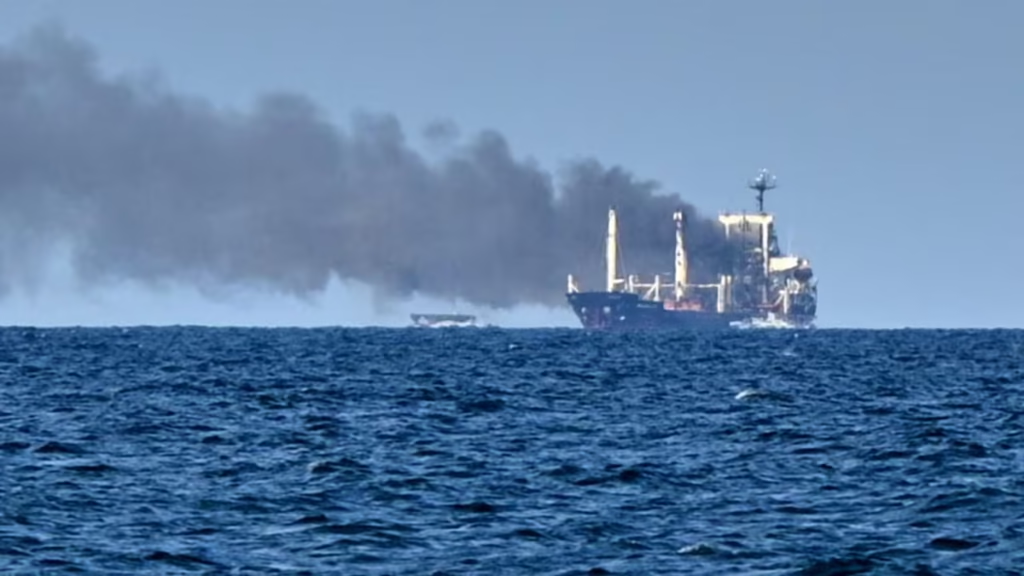
Tragic Strike in the Black Sea: Four Indian Nationals Killed as Russian Missiles Hit Commercial Ship Leaving Ukraine's Odesa Port
New Delhi — In a devastating escalation of maritime violence in the ongoing Russia-Ukraine conflict, four Indian nationals have been tragically killed, and another remains in critical condition following a Russian cruise missile strike on a commercial vessel. The attack occurred on Sunday evening as the ship was departing from Ukraine’s strategic Odesa port.
The incident has sparked widespread diplomatic outrage, highlighting the severe and growing risks faced by civilian seafarers and commercial shipping navigating the volatile waters of the Black Sea. The Ministry of External Affairs (MEA) in India has issued a strong condemnation of the attack, emphasizing that innocent civilian crews must never be targeted in military crossfire.
The Attack on MV GOLDEN LEO
The vessel involved in this tragic incident has been identified as the MV GOLDEN LEO, a commercial ship operating under the flag of Guinea-Bissau. According to official reports, the ship was making its departure from Odesa—Ukraine’s largest and most economically vital seaport—when it was targeted.
The Ukrainian Navy confirmed that the merchant ship was struck by three Russian cruise missiles in a coordinated overnight assault. At the time of the attack, the MV GOLDEN LEO was carrying a crew of 17 members, comprised entirely of Indian and Syrian nationals.
The sudden and brutal nature of the strike left the crew with little time to react. The Ministry of External Affairs confirmed the devastating human toll on Monday, revealing that five Indian nationals were among those directly caught in the blast radius.
“As per information available, four Indian nationals have tragically lost their lives, while one is hospitalized in a critical condition,” the MEA stated, outlining the grim reality of the attack. The identities of the deceased have not yet been publicly released, pending notification of their respective families.
India’s Strong Condemnation and MEA Response
The Indian government has reacted swiftly and firmly to the deaths of its citizens. Historically maintaining a delicate diplomatic balance regarding the Russia-Ukraine war, New Delhi did not mince words when addressing this direct hit on civilian lives and international commerce.
In an official statement, the MEA strongly condemned the military action, reiterating international maritime laws that protect merchant vessels. “India condemns such attacks and reiterates that targeting commercial shipping and endangering innocent civilian crew members, or otherwise impeding freedom of navigation and commerce, is deplorable and should be avoided,” the ministry asserted.
The Indian Mission in Ukraine has been activated to manage the fallout of the crisis. Officials are actively working with local Ukrainian authorities and medical personnel to ensure the critically injured Indian sailor receives the highest level of care possible.
“Our Mission in Ukraine is closely monitoring the situation and is making every effort to extend all possible assistance to those affected,” the MEA spokesperson added. “We extend our deepest condolences to the families of the deceased Indian nationals and wish the injured Indian national a speedy and full recovery.” The embassy is also coordinating the complex logistical and diplomatic procedures required for the repatriation of the deceased sailors’ remains back to India.
Russia’s Justification and the Escalating Violence in Odesa
While the international community processes the targeting of a civilian vessel, Moscow has offered a different narrative regarding its Sunday evening operations. According to the Russian news agency Interfax, the Russian Defence Ministry stated on Monday that its forces were conducting overnight strikes aimed strictly at military and strategic infrastructure.
The Russian military claimed that the cruise missiles were intended to strike fuel reservoirs and logistical hubs at the port of Odesa, which they allege are being used to supply the Ukrainian military. Moscow has not explicitly taken responsibility for the collateral strike on the MV GOLDEN LEO, but the timing and location of the cruise missile deployment align directly with the Ukrainian Navy’s report of the attack on the ship.
This incident is part of a broader, intensified campaign of airstrikes in the region. Odesa has found itself in the crosshairs of relentless bombardments in recent weeks. According to local authorities, Russian strikes have already claimed the lives of 28 people in the Odesa region this month alone, crippling infrastructure and keeping the civilian population under constant threat.
The Growing Threat to Commercial Shipping
The destruction of the MV GOLDEN LEO underscores the deteriorating security environment in the Black Sea, a crucial artery for global trade. Odesa is a lifeline for Ukraine’s economy, particularly for its agricultural exports, which feed millions globally.
Since the collapse of the UN-brokered Black Sea Grain Initiative, which previously guaranteed safe passage for agricultural cargo, commercial vessels have been forced to navigate a treacherous maritime corridor. Ships operating in this zone face the constant threat of sea mines, drone attacks, and, as witnessed on Sunday, direct cruise missile strikes.
The targeting of a Guinea-Bissau-flagged ship manned by Syrian and Indian crews clearly demonstrates that the collateral damage of this conflict extends far beyond the borders of Russia and Ukraine. It sends a chilling message to international shipping companies, likely resulting in skyrocketing insurance premiums and a deep reluctance to send crews into Ukrainian ports.
Safety of Indian Seafarers: A Rising Concern
For India, this tragedy hits particularly close to home. India is one of the world’s largest suppliers of maritime labor, with nearly 10% of the global seafaring workforce originating from the country. Indian sailors are heavily represented on merchant vessels across the globe, inevitably placing them on the front lines of international maritime conflicts.
This is not the first time Indian nationals have found themselves in peril due to overseas conflicts, but the direct loss of four lives in a single missile strike represents one of the most severe maritime casualties for India in recent years. It raises urgent questions about the safety protocols and hazard pay for crews operating in declared war zones. Maritime unions and international shipping bodies are expected to intensify their calls for enhanced protections and stricter adherence to the Geneva Conventions regarding civilian transport.
As families in India await the heartbreaking return of their loved ones, the international community faces yet another stark reminder of the indiscriminate nature of modern warfare. The strike on the MV GOLDEN LEO is a tragic testament to the fact that in global conflicts, it is often innocent civilians simply doing their jobs who pay the ultimate price.