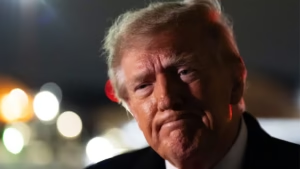
Trump Declares US-Iran Military Conflict “Effectively Over” Amidst Shifting Political Landscape and Strict Demands from Tehran
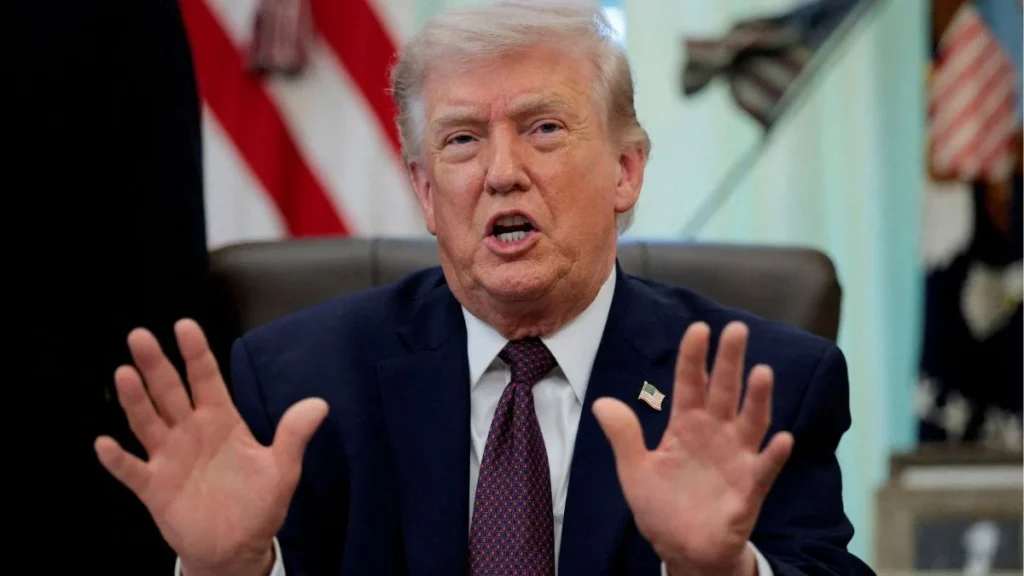
Trump Declares US-Iran Military Conflict "Effectively Over" Amidst Shifting Political Landscape and Strict Demands from Tehran
WASHINGTON/TEHRAN — In a major diplomatic and strategic pivot that could redefine the geopolitical contours of the Middle East, U.S. President Donald Trump announced that the immediate military conflict with Iran is “effectively over.” The declaration, which follows months of intense military engagement and soaring regional tensions, was made following a high-stakes meeting at the White House with Qatar’s Prime Minister, Sheikh Mohammed bin Abdulrahman bin Jassim Al Thani.
Despite the administration’s claims of military victory and the successful degradation of Iranian offensive capabilities, the situation on the ground remains highly volatile. Tehran has swiftly countered Washington’s narrative, issuing stern warnings and laying out seven non-negotiable conditions for a lasting peace. As back-channel diplomacy intensifies—largely facilitated by Qatari mediation—the world watches to see if this precarious pause in hostilities will translate into a permanent ceasefire or merely serve as the calm before another storm.
The View from Washington: “Militarily Decapitated”
Speaking to the press, President Trump projected a decisive American triumph, asserting that Iran’s military infrastructure had been severely weakened by recent operations. “Iran militarily is effectively over,” Trump stated. “We’re just keeping it the status quo.” He went on to describe the Iranian leadership and military apparatus as having been “decapitated,” suggesting that the immediate threat posed by Tehran had been neutralized.
However, the administration is not fully stepping away from its maximum-pressure strategy. The U.S. President emphasized that ensuring the complete dismantlement of Tehran’s nuclear program remains a “non-negotiable” priority. To that end, Trump confirmed the implementation of “Operation Iron Gate,” a comprehensive joint land-and-sea blockade backed by key Gulf allies. This blockade aims to financially and logistically choke the Iranian regime, ensuring they cannot rebuild the military assets that the U.S. claims to have destroyed.
While Trump maintained that the U.S. is not planning an immediate new wave of military strikes, he delivered a stark caveat. “Should there be any change with respect to developments in the Middle East, the United States of America is ‘locked and loaded’ and ready to go,” he warned, reassuring allies that Israel and the broader Middle East are now protected from Iranian threats.
Domestic Pressures: The Midterm Election Effect
Foreign policy analysts and political commentators are pointing to a significant domestic catalyst for Trump’s sudden change in tone: the crushing reality of the recent U.S. midterm elections. The Republican Party suffered a stinging defeat, resulting in the Democratic Party sweeping into control of both the House of Representatives and the Senate.
This shifting balance of power in Washington severely limits the President’s ability to wage prolonged, costly foreign conflicts. With the “power of the purse” now firmly in Democratic hands, securing funding for new military campaigns in the Middle East would face insurmountable legislative hurdles. Consequently, the declaration that the conflict is “effectively over” may be less about the absolute neutralization of Iran and more about a strategic domestic pivot. By claiming a military victory now, the administration can gracefully exit a potentially endless war while re-focusing its resources on the fierce partisan battles awaiting them on Capitol Hill.
Tehran’s Defiance: The “Desperate Gambler”
Unsurprisingly, Tehran’s reading of the situation stands in stark contrast to the narrative broadcast from the White House. Iranian officials have dismissed Trump’s declarations of victory, portraying the United States as a nation deeply fractured by its own foreign policy overreach.
Major General Mohsen Rezaei, the secretary of Iran’s Supreme National Security Council, delivered a blistering response to the U.S. administration. “The war against Iran has torn the U.S. government apart, but Washington is flailing like a desperate gambler,” Rezaei stated. He demanded that the U.S. cease its “imaginary negotiations” and face the reality of the changing geopolitical landscape. “Do not deny the new order in West Asia. It is time to surrender to Iran’s seven conditions,” he added, signaling that Tehran feels emboldened rather than defeated.
The Seven Conditions for Peace
Iran has formalized its stance by issuing a rigid set of seven demands that Washington must accept for an immediate and permanent end to the conflict. These conditions, which reflect Tehran’s desire to reassert its sovereignty and economic independence, reportedly include:
- An End to All Hostilities: A complete cessation of all military actions and aggression across all fronts in the Middle East.
- Lifting the Naval Blockade: The immediate removal of the U.S.-led naval blockade in the strategically vital Strait of Hormuz, a critical chokepoint for global oil supplies.
- Reopening Shipping Routes: The unconditional reopening of all maritime shipping routes through the waterway, ensuring safe passage for commercial and state vessels.
- Sanctions Relief: The comprehensive lifting of all economic sanctions that have crippled the Iranian economy over the past several years.
- Release of Frozen Assets: The immediate unfreezing and return of all Iranian sovereign assets held in overseas banks.
- Cessation of Interference: A firm commitment from the U.S. to end all interference in Iran’s internal and domestic affairs.
- Acknowledgement of a New Regional Order: The implicit demand that Washington recognize the shifting balance of power and Tehran’s prominent role in West Asia’s security architecture.
The Road Ahead: Economic and Global Implications
The chasm between Washington’s rhetoric of absolute victory and Tehran’s demands for total systemic relief leaves little room for easy compromise. The linchpin of this entire standoff may well be the Strait of Hormuz. With a massive portion of the world’s daily oil consumption passing through this narrow waterway, the implementation of “Operation Iron Gate” versus Iran’s demand for unhindered maritime access creates a dangerous flashpoint.
Should the U.S. and its Gulf allies enforce a strict land-and-sea blockade, the likelihood of asymmetrical retaliation from Iran remains high. Such disruptions would invariably send shockwaves through global energy markets, spiking crude oil prices and fueling global inflation.
Qatar’s role as the primary mediator will be tested in the coming weeks. Doha maintains pragmatic ties with both Washington and Tehran, making it one of the few capitals capable of bridging this vast diplomatic divide. Ultimately, the U.S.-Iran conflict may be transitioning from a theatre of kinetic warfare to a grueling war of economic attrition and diplomatic brinkmanship. Whether the conflict is truly “over,” as President Trump claims, will not be determined by press briefings in Washington, but by the quiet, arduous negotiations unfolding behind closed doors in the Persian Gulf.