Gadkari Defends E20 Fuel Policy, Declares Motorists Can Opt for Pure Petrol at a Premium
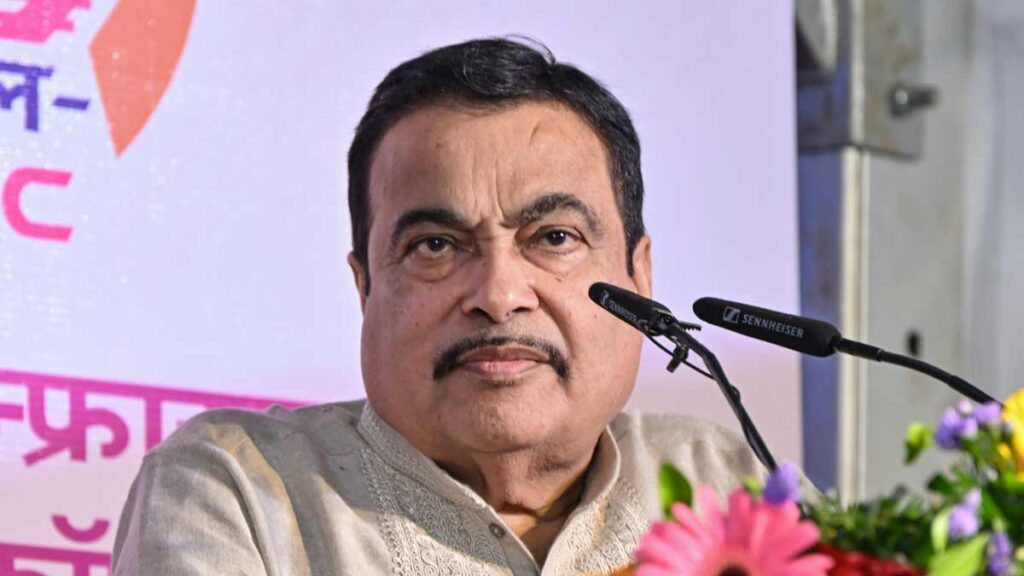
Gadkari Defends E20 Fuel Policy, Declares Motorists Can Opt for Pure Petrol at a Premium
New Delhi: Union Road Transport and Highways Minister Nitin Gadkari has issued a staunch and comprehensive defense of the central government’s ambitious ethanol-blending programme, aggressively pushing back against mounting criticism over the nationwide rollout of E20 petrol. Amid growing public debate regarding vehicle compatibility, potential engine damage, and fuel efficiency, Gadkari offered a straightforward proposition to Indian consumers: motorists who remain apprehensive about using ethanol-blended fuel are free to opt for 100 per cent pure petrol, provided they are willing to pay a higher price for it.
The minister’s remarks come at a time when the government’s push for cleaner, alternative fuels has met with resistance from a section of vehicle owners and opposition leaders. E20 fuel, which consists of a 20 per cent ethanol blend with 80 per cent standard petrol, has become the focal point of a heated debate concerning its long-term impact on vehicles that were originally engineered for lower ethanol concentrations. Gadkari, however, maintained that the availability of pure petrol ensures consumer choice, while rightly adding that unblended fossil fuels come with an additional financial and environmental burden.
Combating Misinformation and Bizarre Claims
A significant portion of the minister’s defense was dedicated to addressing what he termed a “politically motivated misinformation campaign” targeting the government’s biofuel roadmap. The rollout of E20 has been plagued by a series of unverified claims on social media platforms, alleging severe engine degradation. Gadkari categorically dismissed these assertions, stating that all vehicles compliant with E10 fuel are perfectly suited for running on E20 petrol.
Addressing some of the more bizarre rumours circulating online—including viral videos showcasing ants swarming a car’s fuel filler cap, with users falsely alleging the infestation was caused by sugarcane-based E20 fuel—the minister offered a blunt scientific clarification. He explained that ethanol is a highly refined type of alcohol, entirely devoid of sugar or any sweet substance. “When you open a bottle of whisky or rum, do ants flock to it? Ethanol is a similar type of alcohol. Therefore, saying that E20 petrol is sweet or attracts ants is completely wrong,” he stated in a recent media interaction, urging the public not to fall prey to social media hysteria.
Gadkari boldly challenged his critics to produce verified evidence of any petrol-powered vehicle being permanently damaged by E20 fuel. He invited anyone facing genuine, documented problems to file an official complaint on the ministry’s website, assuring citizens that each grievance would be personally investigated. Thus far, he noted, the ministry had not received any formal complaints substantiating these catastrophic engine failure claims.
The Mileage Debate and Scientific Backing
While entirely dismissing the prospect of core engine damage, Gadkari did acknowledge a widely discussed technical reality: a potential slight reduction in fuel efficiency. Because ethanol possesses a lower calorific value compared to pure petrol, some vehicles might experience a minor drop in mileage. The Ministry of Petroleum and Natural Gas estimates this reduction to be around 3 to 5 per cent in certain vehicles.
However, Gadkari explained that this reduction is highly dependent on driving conditions. “There can be some reduction in mileage, particularly during highway driving. In city conditions, where vehicles mostly operate in lower gears, the difference is minimal,” he noted. Furthermore, he emphasized that E20 offers compensating benefits, such as a significantly higher octane rating, superior anti-knock characteristics, faster combustion, and far cleaner engine operation.
The minister underscored that the ethanol blending programme was not an overnight experiment but the result of years of rigorous testing by apex bodies like the Automotive Research Association of India (ARAI) and the Indian Institute of Petroleum (IIP). Major automobile manufacturers were consulted extensively as early as 2021 to ensure ecosystem readiness. Automakers like Maruti Suzuki and Hero MotoCorp have publicly supported the transition, honouring warranties on millions of vehicles running on E20 without reporting abnormal, ethanol-linked engine wear.
While internal ARAI studies have indicated that certain non-metallic components—like older rubber hoses, seals, and O-rings—might experience accelerated aging in legacy vehicles not explicitly engineered for E20, overall engine durability and emissions performance remain fundamentally sound and well within regulatory safety limits.
Rejecting Conflict of Interest Allegations
Beyond the technical debates, the ethanol policy has also been targeted by political opponents alleging a conflict of interest, pointing to the sugar factory businesses owned by Gadkari’s family. The Union Minister fiercely refuted these claims, calling them a baseless conspiracy designed to discredit a vital national initiative.
Gadkari clarified that his family’s involvement in the sugar business predates the government’s modern ethanol policy, and their actual share in the national ethanol production ecosystem is microscopically small. “I gain nothing from the ethanol policy. My share in ethanol production is just 0.07 per cent. With such a small stake, there is no question of any significant financial benefit,” he asserted, adding that a person with a fractional market share could hardly influence a nationwide energy policy for personal gain. He emphasized that the E20 mandate was a collective decision involving the Petroleum Ministry, the Union Cabinet, and extensive scientific research, not a unilateral directive.
The Broader Strategic Vision
For the central government, the transition to E20 is a non-negotiable cornerstone of India’s broader macroeconomic and environmental strategy. India, which imports a vast majority of its crude oil requirements, spends billions in foreign exchange annually. Every litre of domestically produced ethanol blended into petrol directly translates to reduced imported crude, substantial foreign exchange savings, and enhanced national energy security.
Equally important is the socioeconomic impact. The ethanol programme creates massive, guaranteed demand for agricultural produce—primarily sugarcane, maize, and damaged food grains—directly boosting the incomes of millions of Indian farmers. Environmentally, ethanol blending substantially reduces lifecycle carbon emissions and produces negligible particulate matter, contributing significantly to the decarbonisation of the heavily polluting transport sector.
Looking ahead, Gadkari noted that the government is actively expanding consumer fuel choices. For drivers looking to fully embrace alternative energy, regulatory frameworks have already been amended to facilitate higher blends like E85 (85 per cent ethanol) and E100 for Flex Fuel Vehicles (FFVs). Several leading automobile manufacturers are currently gearing up to introduce FFVs to the Indian market, where E85 is expected to be priced notably lower than standard E20, providing yet another cost-effective choice for the Indian consumer.
Ultimately, Gadkari’s message is clear: the transition to greener fuels is an inevitable global shift. While pure fossil fuels will remain available for those willing to pay a premium for legacy consumption, the economic and environmental future of Indian mobility is firmly anchored in ethanol.