Faridabad Terror Module Planned Six Blasts Across India, with Ayodhya Identified as a Key Target
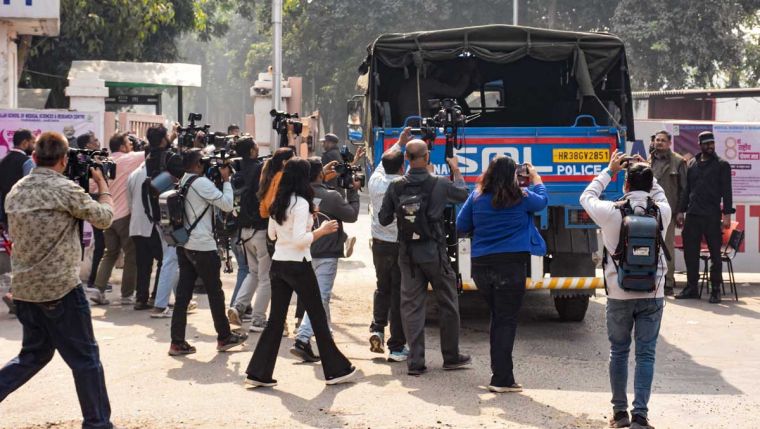
Faridabad Terror Module Planned Six Blasts Across India, with Ayodhya Identified as a Key Target
Law-enforcement agencies have uncovered a sophisticated terror cell operating out of Faridabad, Haryana, revealed to have planned at least six coordinated bomb blasts across major cities in India — including the holy city of Ayodhya. Investigations indicate the module was linked to proscribed militant organisation Jaish‑e‑Mohammed (JeM) and comprised professionals posing as academics and doctors, signalling a deeply disturbing evolution in terror network tactics in India.
Arrests and Raids
During a series of multi-state raids, authorities seized over 2,900 kg of explosive-making materials including ammonium nitrate, heavy metal components, timers, firearms and ammunition in Faridabad and adjacent regions. Several suspects have been apprehended — among them doctors and academicians — who allegedly operated under the ruse of legitimate institutions while orchestrating terror logistics.
The Plot: Multiple Cities, Single Day
Probe findings suggest the module’s strategy was to execute serial attacks on a predetermined date, pouring explosives into vehicles and public infrastructure across different locations to maximise impact and casualties. Among the listed targets was Ayodhya, known for its religious significance, suggesting the plan aimed to provoke communal tensions and dramatic national fallout rather than merely local disruption.
Ayodhya as a Flagship Target
The mention of Ayodhya as a target elevates the significance of the plot. By choosing such a symbolic location, the perpetrators sought to strike at both physical and psychological fault-lines of Indian society. Officials believe the aim was to exploit religious sentiment, disrupt national harmony, and gain visibility for the terror module.
White-Collar Terror: Changing Face of Threats
Investigators emphasise that this is not a typical grassroots militant cell. Many of the suspects have professional backgrounds, including medical training. This “white-collar terror” approach grants operational sophistication: access to funds, technical skills, logistics networks and bigger camouflage under educational or research fronts. It also complicates detection and challenges conventional counter-terror strategies.
Implications for National Security
The discovery of this module carries broad implications:
- Threat escalation: With multiple simultaneous blasts planned, the risk of high-casualty mass-impact terror in India appears elevated.
- Target selection: The inclusion of Ayodhya and other high-visibility sites shows intent to maximise media attention and communal provocation.
- Operational sophistication: The use of academics, complex explosive material and multi-state coordination signals a shift toward deeper, harder-to-track terror networks.
- Emergency-response readiness: The capacity of security forces to detect, monitor and neutralise such networks — especially white-collar ones — will be under renewed focus.
Measures and Response
Security agencies are leveraging intelligence, forensic, cyber-surveillance and financial-tracking tools to dismantle the module completely. Border-exit checks, transit node security, heavy-vehicle screenings and liaison among states and central agencies are being intensified. At Ayodhya and other sensitive locations, security has been further strengthened in anticipation of any retaliatory or copy-cat action.
What Lies Ahead
The module’s planned attack date remains validated as December 6 — the anniversary of the demolition of the Babri Masjid — a symbolic choice intended to send a message. With partial pieces of the plan exposed, the full ambit and links of the network are still under scrutiny. Authorities are now tracing the funding chain, handler links (domestic and overseas), training channels and potential sleeper cells.
While the module was disrupted before executing all six planned blasts, the revelation itself sends alarm signals. It underlines the reality that India’s counter-terror architecture must constantly adapt to evolving threats that blend professions, technology, ideology and logistics.