Donald Trump Questions 2026 Midterm Election Results Following Historic Democratic ‘Blue Wave’
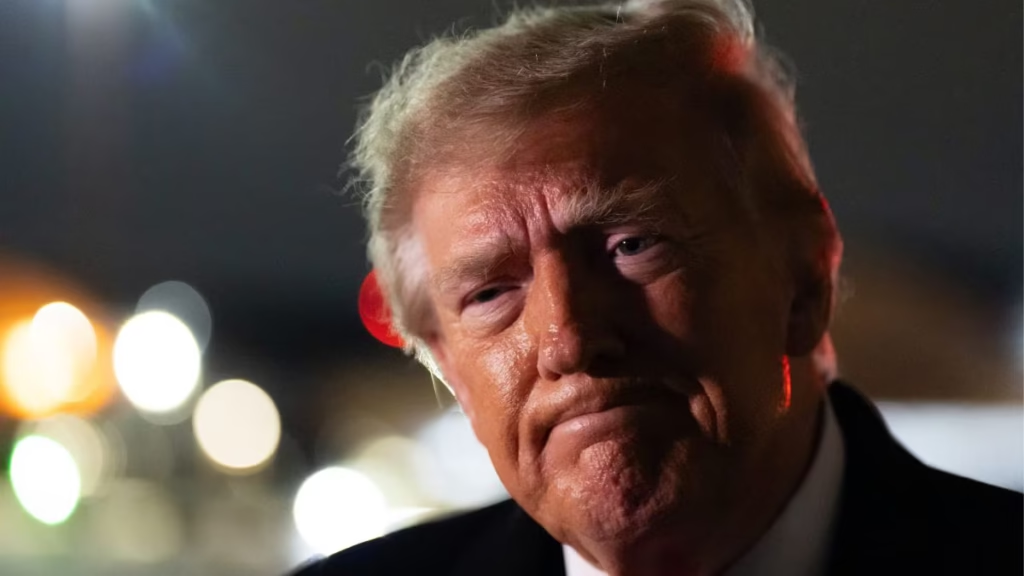
Donald Trump Questions 2026 Midterm Election Results Following Historic Democratic 'Blue Wave'
WASHINGTON, D.C. — In the wake of the 2026 United States Midterm Elections, the political landscape in Washington has experienced a seismic shift. Defying historical trends and pre-election polling, the Democratic Party has secured a sweeping victory, successfully taking control of both the Senate and the House of Representatives. Following this unexpected “Blue Wave,” President Donald Trump has publicly cast doubt on the integrity of the electoral process, echoing sentiments from past election cycles by questioning the validity of voting machines and early voting tallies.
The dramatic reversal in tone from the President comes after an initial period of apparent concession, plunging the nation’s capital back into an atmosphere of intense partisan polarization and debates over electoral integrity.
The Truth Social Outburst: Questioning the Mandate
Nearly a week after the polls closed and the magnitude of the Republican defeat became apparent, President Trump took to his social media platform, Truth Social, to voice his skepticism regarding the results. In a series of posts on Monday morning, he targeted the mechanics of the election itself.
“Does anybody really believe this ‘election’ was honest?” Trump wrote to his millions of followers. “How could the polls be so incredibly wrong?”
The President specifically aimed his criticism at early voting protocols and electronic voting systems, both of which have been frequent targets of his in previous electoral cycles. “Some of the early voting ‘dumps’ were so massive that it was mathematically impossible to win, no matter how many people turned out on Election Day,” he claimed. He further alleged, without providing immediate evidence, that the process was manipulated by technology, stating, “It is all a game of machines, which have somehow become more important than the voters themselves!”
These allegations have reignited debates surrounding election security, with critics arguing that such rhetoric undermines democratic institutions, while his supporters insist that systemic vulnerabilities need urgent addressing.
A Sharp Shift in Tone: From Congratulations to Condemnation
Political analysts and media observers have been quick to point out the stark contrast between Trump’s Monday morning statements and his initial reaction to the unfolding results.
On the evening of November 3 and the morning of November 4, as the early projections indicated a strong showing for the Democrats, Trump engaged in a surprisingly conciliatory phone call with CBS News. During that exchange, he offered an olive branch across the aisle, stating, “My congratulations to the Democrats, and I look forward to working together with you for the good of our country.”
Furthermore, in an interview broadcast on CBS’s 60 Minutes just a day before his Truth Social posts, Trump appeared to accept the political reality of the loss. He attributed the Republican underperformance to “bad messaging” rather than systemic fraud and expressed a willingness to collaborate with the incoming Democratic majority on bipartisan issues, particularly immigration reform. The sudden pivot to questioning the election’s legitimacy suggests a rapid recalibration of political strategy within the administration.
The “Not on the Ballot” Defense
In his post-election commentary, President Trump has vehemently pushed back against the narrative that the 2026 midterms served as a referendum on his presidency or his administration’s policies. He argued that the Republican defeat was primarily a result of his absence from the ticket.
“I was not on the ballot, and if I had been, we would have won in a massive landslide!” Trump declared. “Because my name wasn’t on the ticket, we simply couldn’t get enough of our incredible voters to come out and cast their ballots.”
This defense, however, contrasts with the final weeks of the campaign. In the lead-up to Election Day, Trump held numerous rallies nationwide, explicitly urging his base to vote for Republican candidates as if he were personally on the ballot. For many political strategists, the 2026 midterms were undeniably a stress test of the Trump administration’s current mandate.
The Iran Conflict and Economic Headwinds
While the President focuses on the mechanics of the election, other prominent figures within the Republican Party are engaging in deep introspection regarding policy missteps. Vice President JD Vance offered a starkly different diagnosis for the electoral drubbing. Taking to social media, Vance pointed directly to the recent and highly controversial military engagements in the Middle East.
The “Iran War,” as it has been dubbed, alongside the subsequent spikes in global energy prices and domestic inflation, heavily weighed on the minds of voters. In his 60 Minutes interview, Trump acknowledged the public’s frustration over soaring gas prices and the anxieties surrounding the overseas conflict, though he staunchly defended his foreign policy decisions as necessary for national security. Despite his claims that the domestic economy remains fundamentally strong, the geopolitical instability clearly translated into voter dissatisfaction at the ballot box.
Historic Upsets in Republican Fortresses
The sheer scale of the Democratic victory is underscored by the geographic breakdown of the results. The 2026 cycle saw long-standing Republican strongholds crumble in historic fashion.
In Kansas, a Democratic candidate captured a U.S. Senate seat for the first time in 94 years, a stunning upset that completely upended traditional electoral maps. Similarly, in South Carolina, a Democratic challenger unseated a heavily favored Republican incumbent—and a close ally of the President—marking the first Democratic Senate victory in the state in nearly three decades. Even in Texas, shifting demographics and suburban realignments contributed to significant Democratic gains, signaling trouble for the GOP’s long-term electoral college arithmetic.
The Road Ahead: A ‘Lame-Duck’ Era?
The implications of the 2026 midterm elections are profound for the remainder of Donald Trump’s term. With the Democratic Party now wielding majorities in both the House and the Senate, the President’s legislative agenda faces an impenetrable roadblock.
Beyond legislative gridlock, a Democrat-controlled Congress possesses formidable oversight powers. The administration can expect an avalanche of congressional inquiries, committee hearings, and subpoenas probing everything from foreign policy decisions in the Middle East to domestic economic strategies.
As Washington braces for intense partisan warfare, the President’s decision to question the electoral results sets a combative tone for the next two years. The U.S. government now enters what many are dubbing a contentious “lame-duck” era, where governance will likely take a backseat to intense political posturing and preparation for the next general election.