IMF Upgrades India’s GDP Growth Forecast to 7% for FY27, Cites Resilient Domestic Demand and Strong Services
IMF Upgrades India’s GDP Growth Forecast to 7% for FY27, Cites Resilient Domestic Demand and Strong Services
In a major vote of confidence for the Indian economy amidst a sluggish and uncertain global environment, the International Monetary Fund (IMF) has significantly raised its growth forecast for India. In its latest ‘World Economic Outlook’ report released in October, the IMF projected India’s Gross Domestic Product (GDP) to grow at a robust 7.0 percent for the financial year 2026-27 (FY27). This represents a substantial upward revision of 0.6 percentage points from its previous estimate of 6.4 percent made in July.
This upgraded forecast solidifies India’s position as the fastest-growing major economy in the world, dramatically outpacing the projected average growth rate of advanced economies, which the IMF estimates at a mere 1.8 percent.
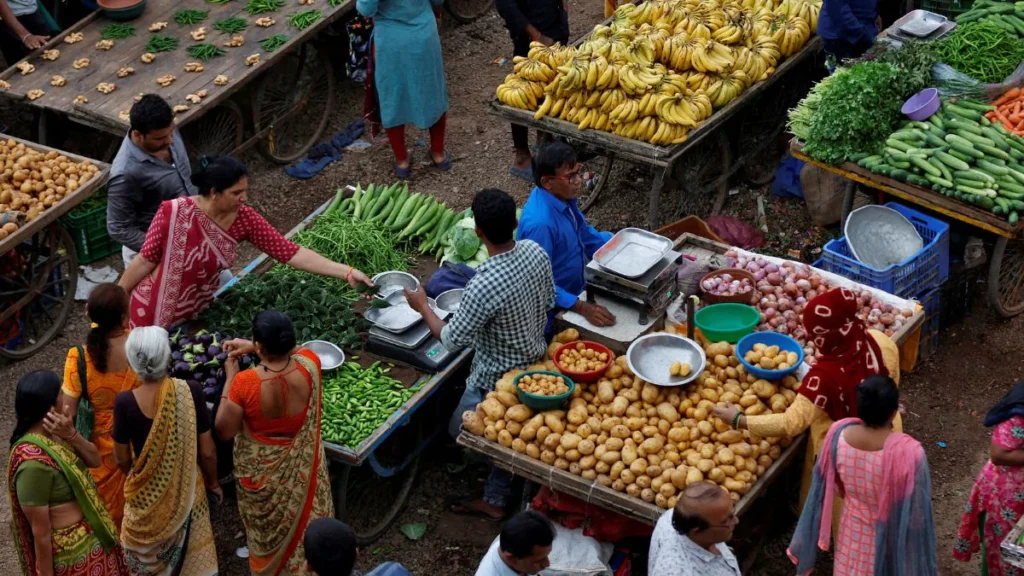
Drivers Behind the Upgraded Forecast The IMF’s decision to lift the growth outlook is not arbitrary; it is backed by several strong macroeconomic indicators. According to the institution, the primary catalysts for this upward revision are “stronger-than-expected momentum, supported by resilient domestic demand and robust services activity.”
While many major economies across the globe are grappling with the lingering effects of high inflation, elevated interest rates, and the economic fallout of ongoing geopolitical conflicts, India’s vast domestic consumer base has acted as a powerful shock absorber. The sheer volume of internal consumption has shielded the Indian economy from external volatility.
Furthermore, the IMF highlighted that India’s growth story is fundamentally supported by “favourable demographic dynamics, a large and expanding domestic market, and continued structural reforms.” The government’s sustained push towards capital expenditure, infrastructure development, and digital public goods has evidently enhanced the country’s long-term growth potential in the eyes of global rating and financial agencies.
A Look Ahead to FY28 The optimism extends beyond the current financial year. The IMF has also revised its growth projection for the financial year 2027-28 (FY28) upwards by 0.3 percentage points, pegging it at a solid 7.0 percent. This indicates that the international body views India’s current economic expansion not as a fleeting post-pandemic rebound, but as a durable and sustainable growth trajectory.
However, it is worth noting that while the 7.0 percent projection is highly commendable in the current global context, it does represent a slight moderation compared to the extraordinary 7.8 percent GDP growth India recorded in the previous financial year (FY26).
Alignment with Domestic and Global Agencies The IMF’s revised estimates are now closely aligned with the projections made by India’s own central bank. Following its recent monetary policy committee meeting, the Reserve Bank of India (RBI) projected a GDP growth rate of 7.1 percent for the current financial year.
This consensus is shared across the board by other major international financial institutions. In recent weeks, agencies such as the Asian Development Bank (ADB), S&P Global Ratings, and Fitch Ratings have all acknowledged the underlying strength of the Indian economy and upgraded their respective growth forecasts to hover around the 7 percent mark.
Looming Risks and Global Headwinds Despite the overwhelmingly positive outlook, the IMF’s report also sounds a note of caution regarding potential external shocks and domestic risks that could derail this growth momentum.
- Geopolitical Tensions and Oil Prices: The most prominent risk factor remains the ongoing geopolitical instability, particularly the escalating conflicts in the Middle East and the war in Europe. The IMF warned that a “prolonged stalemate or further escalation in the Middle East could keep energy and food prices elevated and volatile.” For a country like India, which imports a massive portion of its crude oil requirements, any significant spike in international oil prices directly inflates the import bill, worsens the current account deficit, and puts downward pressure on the Rupee.
- Shipping Disruptions: Related to the Middle East conflict, ongoing disruptions in crucial shipping lanes, particularly around the Red Sea and the Strait of Hormuz, remain a significant logistical and economic risk. While the IMF noted that an easing of these blockades and stable oil prices underpin their positive outlook, any sudden worsening of the maritime security situation could disrupt India’s export-import supply chains and increase freight costs.
- Inflationary Pressures: On the domestic front, keeping inflation within the RBI’s tolerance band remains a challenge. If global commodity prices remain high, it could revive domestic inflationary pressures, forcing the RBI to keep interest rates higher for longer. Elevated interest rates make borrowing more expensive for both corporations and consumers, which can eventually dampen investment and consumption.
Conclusion The IMF’s latest World Economic Outlook is a strong endorsement of India’s economic resilience and policy direction. It highlights the success of structural reforms and the undeniable strength of a massive, consumption-driven domestic market. However, for India to sustain this impressive 7 percent growth momentum, policymakers will have to walk a tightrope—balancing growth initiatives with fiscal prudence, while simultaneously shielding the domestic economy from volatile global energy markets and supply chain disruptions.