Power Transition in Karnataka: Shivakumar and Siddaramaiah Head to Delhi to Finalize Cabinet and State Leadership
Power Transition in Karnataka: Shivakumar and Siddaramaiah Head to Delhi to Finalize Cabinet and State Leadership
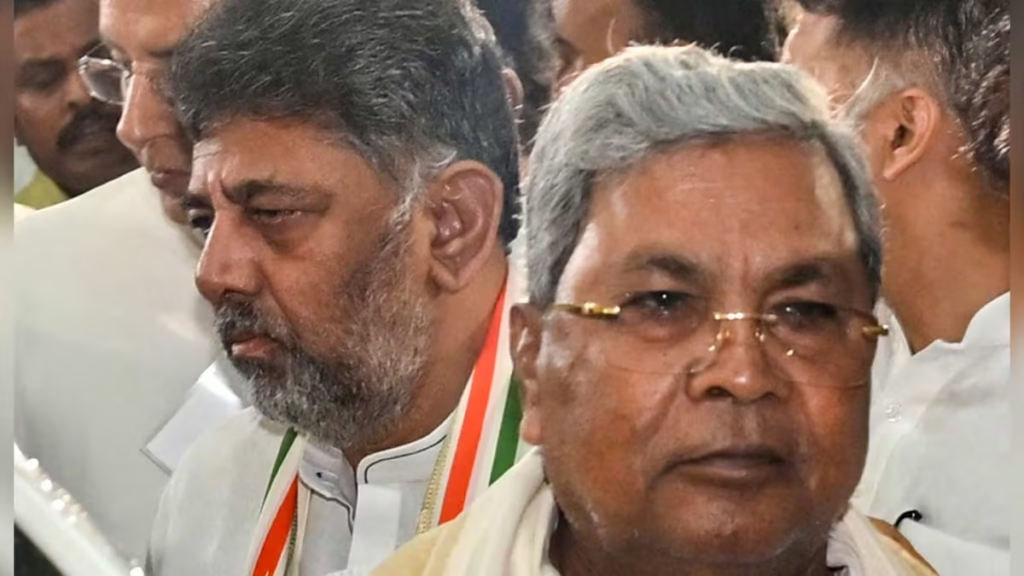
NEW DELHI/BENGALURU — As the political landscape in Karnataka undergoes a pivotal transition, Chief Minister-designate D.K. Shivakumar and caretaker Chief Minister Siddaramaiah are scheduled to travel to New Delhi on Monday. The high-stakes visit aims to facilitate critical discussions with the Congress high command regarding the formation of the new cabinet and a comprehensive organizational restructuring within the state unit. With Shivakumar set to take the oath of office on June 3, the meetings in the national capital will determine the contours of the new power structure, balancing intense factional aspirations, caste equations, and regional representation.
The Power Transition and a New Era
The impending swearing-in of D.K. Shivakumar marks the culmination of a long-anticipated transition of power in Karnataka. Following the Congress party’s resounding victory in the 2023 state assembly elections, a delicate power-sharing arrangement was brokered by the central leadership between the state’s two regional stalwarts. Siddaramaiah, having completed his agreed-upon tenure at the helm, has now stepped down to make way for Shivakumar, ending what has occasionally been a prolonged underlying power tussle.
This seamless transfer of the baton reflects the Congress high command’s strategic grip on the state’s political dynamics, though the real challenge now lies in accommodating the loyalists of both camps in the incoming administration. Party sources indicate that the new cabinet is poised for a significant overhaul. The incoming Shivakumar administration is expected to induct several fresh faces to inject new energy into the government, while several ministers from the outgoing Siddaramaiah cabinet may find themselves dropped. This reshuffle is a calculated political maneuver aimed at mitigating anti-incumbency sentiments and rewarding grassroots leaders who have demonstrated unwavering performance.
The Delhi Deliberations and Ministerial Aspirants
The joint trip to Delhi by Shivakumar and Siddaramaiah is a visual testament to the party’s efforts to project a united front. However, the accompanying entourage tells a story of intense political lobbying. Siddaramaiah’s son, Member of the Legislative Council (MLC) Yathindra Siddaramaiah, is notably expected to participate in the high-level meetings. Widely regarded as a strong contender for a ministerial berth, Yathindra has been vocal about his aspirations.
Speaking to the press on Sunday, Yathindra expressed optimism about his induction into the new cabinet, claiming that the party leadership had previously assured him of a ministerial position. Despite his clear ambitions for a portfolio, he was quick to dismiss widespread speculation linking him to a potential Deputy Chief Minister post. “We have neither made any proposal nor raised any demand for the Deputy CM’s post. We also do not know what the high command will decide,” he clarified, emphasizing his deference to the central leadership.
The scramble for power has also seen a flurry of activity among other elected representatives. Several prominent Congress Members of the Legislative Assembly (MLAs)—including Sharan Prakash Patil, Raghavendra Hitnal, and Basanagouda Daddal—are also heading to Delhi. Their objective is to meet with senior party strategists and secure a place in Shivakumar’s new cabinet.
The Battle for the KPCC Presidency
Beyond the cabinet portfolios, the Delhi discussions will heavily focus on filling the crucial post of the Karnataka Pradesh Congress Committee (KPCC) president, a position currently held by Shivakumar. As he ascends to the Chief Minister’s office, adhering to the party’s structural norms necessitates the appointment of a new state unit chief. The selection of the next KPCC president is critical for maintaining party discipline and preparing the ground for upcoming electoral battles.
Former Karnataka Public Works Department Minister and Yamakanamaradi MLA Satish Jarkiholi has emerged as a frontrunner for the coveted post. Jarkiholi is widely viewed as a consensus candidate capable of bridging the factional divides that often plague the state unit. While acknowledging that discussions regarding social representation in the new government are imminent, Jarkiholi maintained a diplomatic stance, stating he had not explicitly demanded any specific position.
Caste Calculus and the Deputy Chief Minister Conundrum
Karnataka’s political matrix is intrinsically tied to its complex caste demographics, and the new government’s formation is heavily influenced by these considerations. The possibility of creating multiple Deputy Chief Minister positions has been floated as a mechanism to ensure adequate social and regional representation. Although the Congress leadership has officially maintained that no formal proposal for multiple Deputy CMs has been entertained thus far, pressure from influential communities is mounting.
The politically formidable Lingayat community, a crucial vote bank in northern Karnataka, is actively demanding adequate representation. Supporters of veteran Lingayat leader and senior Congress MLA M.B. Patil have intensified their lobbying efforts. They are pushing for a high-profile role for their leader, proposing either his appointment as the new KPCC chief or his elevation to a Deputy Chief Minister post to explicitly represent the Veerashaiva-Lingayat demographic.
Similarly, leaders from other prominent communities are looking to secure their footing in the new administration. Former Union Minister K.H. Muniyappa is navigating the transition with measured optimism. Amid speculation regarding the representation of leaders from his camp and the potential induction of his daughter, MLA Roopa Shashidhar, into the cabinet, Muniyappa reaffirmed his loyalty to the central leadership. “I have worked under the high command for 30 years. Whatever decision the high command takes, we will abide by it,” Muniyappa told reporters, projecting a disciplined approach amidst the internal jockeying for power.
Looking Ahead
As June 3 approaches, all eyes remain fixed on New Delhi. The Congress high command faces the delicate task of balancing the ambitions of seasoned veterans with the aspirations of younger leaders. The transition from Siddaramaiah to Shivakumar is a watershed moment for the Karnataka Congress. As the leaders deliberate behind closed doors, the ultimate outcome will be a carefully calibrated exercise in political appeasement, social engineering, and administrative foresight aimed at solidifying the party’s stronghold in the state.