China, Pakistan Advancing Missile Capabilities That Could Potentially Reach US: Intelligence Assessment Raises Global Security Concerns
China, Pakistan Advancing Missile Capabilities That Could Potentially Reach US: Intelligence Assessment Raises Global Security Concerns
A fresh intelligence assessment presented to US lawmakers has raised alarms over the evolving missile capabilities of China and Pakistan, suggesting that both nations are advancing technologies that could potentially bring the United States within striking range. The development signals a significant shift in global strategic dynamics and underscores growing concerns about long-range missile proliferation.
According to the United States’ 2026 Annual Threat Assessment, Director of National Intelligence Tulsi Gabbard highlighted that multiple countries—including China and Pakistan—are actively developing advanced missile systems capable of delivering both nuclear and conventional payloads over long distances. These advancements, she noted, could “put our homeland within range,” marking a critical escalation in perceived threats to US national security.
Expanding Missile Capabilities
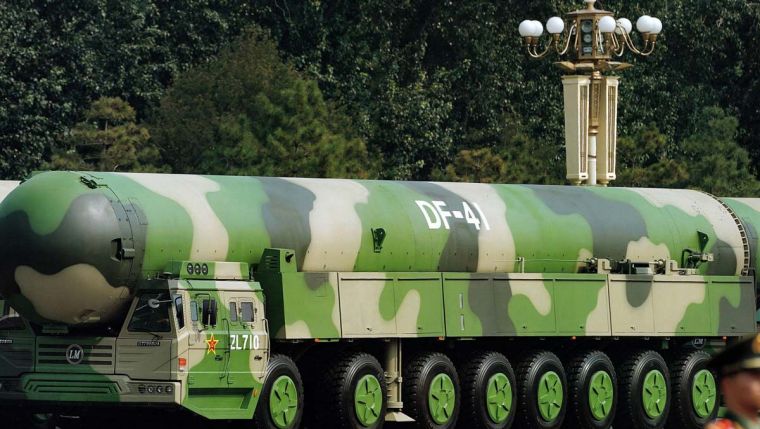
China’s missile programme has long been a focal point of global defence analysis, but recent reports indicate a rapid acceleration in both scale and sophistication. Beijing is believed to be expanding its arsenal of intercontinental ballistic missiles (ICBMs), with some estimates suggesting deployment of over 100 such missiles in silo fields.
Modern Chinese ICBMs, such as variants of the DF-5, are capable of travelling distances exceeding 13,000 kilometres, with newer configurations potentially reaching up to 20,000 kilometres. This range places the continental United States well within reach. These missiles can also carry multiple independently targetable reentry vehicles (MIRVs), significantly increasing their destructive potential and complicating missile defence systems.
In addition to expanding its nuclear arsenal, China is developing advanced delivery systems designed to evade or bypass missile defence shields. Analysts note that such capabilities could challenge existing US defensive infrastructure and force a reassessment of strategic deterrence frameworks.
China’s broader military modernisation, including hypersonic weapons and precision-guided systems, is further intensifying concerns. Its growing missile reach has already prompted the United States to rethink its military posture in the Indo-Pacific region, particularly the vulnerability of forward-deployed air bases.
Pakistan’s Long-Range Ambitions
While China’s missile programme is more mature, Pakistan’s developments are also drawing increased scrutiny. US intelligence assessments suggest that Islamabad is pursuing increasingly sophisticated ballistic missile technologies, including long-range systems that could eventually evolve into intercontinental capabilities.
Officials have indicated that Pakistan’s efforts may include the development of larger rocket motors and enhanced payload capacities, key components required for ICBMs. Although such capabilities are believed to be several years away, the trajectory of Pakistan’s programme has raised concerns about its long-term strategic reach.
Currently, Pakistan’s missile arsenal is primarily focused on regional deterrence, particularly vis-à-vis India. Systems like the Shaheen-3, with a range of approximately 2,750 kilometres, already provide coverage across South Asia.
Recent advancements, including cruise missiles such as the Taimoor—which can strike targets up to 600 kilometres away—demonstrate Islamabad’s ongoing efforts to enhance precision and survivability.
However, the possibility of transitioning from regional to intercontinental strike capabilities marks a significant shift that could alter global threat perceptions.
Strategic Implications
The convergence of Chinese and Pakistani missile advancements has broader geopolitical implications. For Washington, the prospect of additional states acquiring the capability to strike the US mainland introduces new complexities in deterrence and defence planning.
Traditionally, only a handful of nations—such as Russia, China, and North Korea—have possessed ICBMs capable of reaching the United States. The potential inclusion of Pakistan in this category would expand the spectrum of strategic threats and require adjustments in US missile defence systems, early warning networks, and diplomatic strategies.
Moreover, the development of advanced delivery systems capable of evading missile defences poses a direct challenge to existing security architectures. As countries invest in hypersonic glide vehicles, manoeuvrable warheads, and stealth technologies, the effectiveness of traditional interception systems may diminish.
The intelligence assessment also underscores a broader trend of strategic alignment among certain nations. Growing defence cooperation between China and Pakistan, including technology transfers and joint development initiatives, has been noted as a factor accelerating military modernisation in the region.
Regional and Global Reactions
The developments come amid heightened geopolitical tensions and a rapidly evolving global security landscape. In South Asia, India is closely monitoring advancements in both Chinese and Pakistani missile programmes, as it seeks to bolster its own defensive capabilities.
Globally, the findings are likely to intensify debates over arms control and non-proliferation. Efforts to revive or establish new agreements governing missile technology and nuclear weapons have faced significant challenges in recent years, particularly amid rising strategic competition among major powers.
China has consistently maintained that its military build-up is defensive in nature and adheres to a “no first use” nuclear policy. Pakistan, too, has previously rejected claims that its missile programme poses a threat beyond regional security, emphasising its focus on deterrence.
A Changing Security Landscape
The latest assessment highlights a fundamental shift in the global balance of power, where advancements in missile technology are reshaping traditional notions of distance and deterrence.
As China continues to expand its already formidable capabilities and Pakistan explores the possibility of extending its reach, the United States faces a more complex and multi-dimensional threat environment than ever before.
For policymakers, the challenge lies in balancing deterrence, defence, and diplomacy in an era where technological advancements are rapidly eroding geographical barriers.
The evolving missile capabilities of China and Pakistan serve as a stark reminder that the global security landscape is entering a new phase—one defined not only by the number of weapons, but by their range, precision, and ability to evade defences.