Jammu and Kashmir Political Crisis: Will Omar Abdullah’s Government Survive the 14-Day Ultimatum by 25 Rebel MLAs?
Jammu and Kashmir Political Crisis: Will Omar Abdullah’s Government Survive the 14-Day Ultimatum by 25 Rebel MLAs?
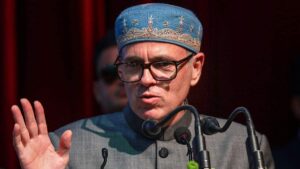
Srinagar: Barely weeks after celebrating a historic electoral victory and forming the government in the Union Territory of Jammu and Kashmir, Chief Minister Omar Abdullah is facing a massive political storm. In a shocking turn of events, 25 Members of the Legislative Assembly (MLAs) belonging to the ruling National Conference (NC) have raised a banner of revolt, issuing a strict 14-day ultimatum to the Chief Minister. The dissenting legislators have threatened to withdraw their support if their grievances remain unaddressed, a move that could effectively plunge the newly formed government into a minority and lead to its collapse.
To diffuse the escalating crisis, National Conference President Dr. Farooq Abdullah and Chief Minister Omar Abdullah have stepped in for emergency damage control, scheduling a high-stakes closed-door meeting with the warring MLAs in Srinagar on Friday morning.
The Trigger: Cabinet Expansion and Ignored Veterans
The seeds of this sudden rebellion were sown during the recent cabinet expansion on October 26, 2024. Chief Minister Omar Abdullah expanded his council of ministers by inducting four National Conference MLAs: Ali Mohammad Sagar, Mir Saifullah, Shamima Firdous, and Altaf Ahmed Wani.
However, the decision to elevate these specific leaders left several veteran legislators feeling sidelined and humiliated. Senior figures like Eidgah MLA Mubarak Gul and Abdul Majeed Larmi were notably excluded from the cabinet, sparking immediate outrage. The dissatisfaction was highly public, with Larmi openly expressing his dismay and Gul threatening to hold a press conference to expose party rifts. In an attempt to placate Gul, party patron Farooq Abdullah hastily appointed him as the party’s general secretary, replacing Ali Mohammad Sagar. However, this cosmetic leadership reshuffle failed to quell the broader anger brewing among the elected representatives.
The 14-Day Ultimatum: What Are the Rebel MLAs Demanding?
Between October 30 and November 5, the disgruntled MLAs held five secret strategy meetings to consolidate their position and outline their terms. The rebel faction has now presented a comprehensive list of demands to the party leadership, making it clear that they are prepared to pull the plug on the government if ignored.
The core demands of the 25 dissenting MLAs include:
1. A Complete Cabinet Overhaul: The rebels are demanding the immediate removal of all currently inducted ministers and the formation of a fresh Council of Ministers.2. Transparent and Merit-Based Selection: The lawmakers have expressed intense frustration over the concentration of power among a few select leaders. They are demanding that future cabinet appointments and department allocations be made transparently, based on merit, and in consultation with all elected MLAs.3. Removal of the Chief Minister’s Advisor: The dissenting group has heavily scrutinized the role of Nasir Sogami, a close advisor to Chief Minister Omar Abdullah. They are demanding his immediate removal, alleging undue interference in party and governance matters.4. Stronger Stance on Article 370: Beyond internal power struggles, the rebellion has an ideological undertone. The MLAs are demanding that the government take a much more aggressive and uncompromising stance on the restoration of Article 370, Article 35A, and other constitutional safeguards that were revoked in August 2019.
The Ripple Effect: MP Ruhullah Mehdi’s Resignation
The crisis within the National Conference is not limited to the legislative assembly. Adding immense pressure to the Abdullah family, Srinagar Member of Parliament Aga Syed Ruhullah Mehdi recently announced his resignation.
A vocal critic of the dilution of Article 370, Mehdi’s exit signals a deep ideological fracture within the party. His departure validates the concerns of the rebel MLAs, who feel the current leadership is compromising on the core promises made to the people of Kashmir during the election campaign. Mehdi’s exit has severely dented the party’s public image, portraying the leadership as disconnected from its grassroots ideological commitments.
Assembly Mathematics: Will the Government Fall?
To understand the gravity of the 14-day ultimatum, one must look at the arithmetic of the Jammu and Kashmir Legislative Assembly.
The House consists of 95 seats (90 elected and 5 nominated). Currently, the nominated seats remain vacant, making the effective strength of the House 90. To maintain a simple majority, a party or coalition requires 46 seats.
At present, the National Conference-led alliance holds a comfortable 53 seats. However, if the 25 rebel MLAs make good on their threat and resign or officially withdraw support, the political landscape will shift drastically.
- The coalition’s strength would plummet to just 28 seats.
- The resignation of 25 MLAs would reduce the total effective strength of the House to 65.
- The new majority mark would be 33.
With only 28 seats in a 65-member effective house, the Omar Abdullah government would be officially reduced to a minority, paving the way for the collapse of the government and the potential imposition of President’s Rule, followed by fresh elections.
What Lies Ahead for Jammu and Kashmir?
The next 14 days are critical for the political future of Jammu and Kashmir. The Friday morning meeting between Farooq Abdullah, Omar Abdullah, and the 25 warring MLAs will likely determine the fate of the current government.
For Omar Abdullah, the challenge is twofold: he must accommodate the political ambitions of his veteran leaders while proving to his ideological base that he is serious about fighting for the region’s special status. Striking a balance between administrative pragmatism and the emotional demands regarding Article 370 will require exceptional political maneuvering.
If the National Conference leadership fails to broker a peace deal, Jammu and Kashmir could once again be pushed into an era of political instability, undermining the democratic process that was recently restored after years of direct central rule.