Erika Kirk: Widow of Charlie Kirk Says She Won’t Pursue Death Penalty for Accused Killer
Erika Kirk: Widow of Charlie Kirk Says She Won’t Pursue Death Penalty for Accused Killer
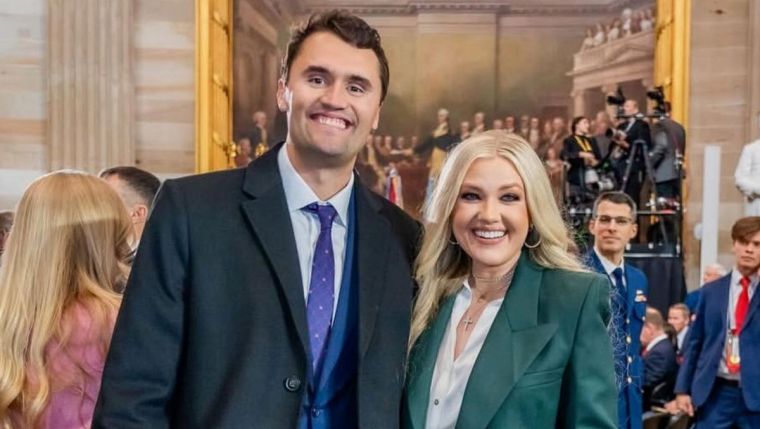
November 6, 2025 | Washington, D.C. —Weeks after the shocking murder of conservative activist and Turning Point USA founder Charlie Kirk, his widow Erika Kirk has spoken publicly about her stance on the fate of her husband’s alleged killer, Tyler Robinson. In an emotional address, Erika revealed that she will not personally push for the death penalty, saying her decision is grounded in faith, forgiveness, and a commitment to peace over revenge.
A choice guided by faith
Erika Kirk said she believes that vengeance is not hers to seek. “I do not want that man’s blood on my conscience,” she stated. “If I stand before God one day and He asks me why I sought death instead of forgiveness, I don’t want to say I let anger guide me.”
Her remarks have resonated widely, reflecting a deep spiritual conviction and a clear effort to rise above hatred. “Charlie spent his life trying to reach young men like the one who took his life,” she said. “He wanted to change hearts, not destroy them. That’s how I choose to honor him.”
Erika’s words have drawn praise from religious and civic leaders, who describe her response as an act of extraordinary grace. Many have contrasted her decision with the often punitive tone of public discourse, calling her a model of compassion during tragedy.
The case against Tyler Robinson
Tyler Robinson, 22, has been charged with aggravated murder, obstruction of justice, and several related offenses following Charlie Kirk’s fatal shooting during a public speaking event in Utah earlier this year. Prosecutors have already announced their intent to pursue the death penalty, citing the calculated nature of the attack and its impact on the nation.
While Erika’s personal opposition to capital punishment does not prevent prosecutors from seeking it, her statement could influence the broader conversation around the case. Legal experts say that a victim’s family’s wishes often hold moral, if not legal, weight in the courtroom and the court of public opinion.
Turning grief into purpose
Despite her immense loss, Erika Kirk has taken on a new public role as she steps into leadership at Turning Point USA, the conservative youth movement her husband founded. She was unanimously appointed CEO and Chair of the Board, a position from which she hopes to carry forward Charlie’s mission of empowering young Americans.
“I will not let hatred define me,” she said. “My mission now is to continue Charlie’s work — to inspire, to educate, and to love this country as fiercely as he did.”
Colleagues describe Erika as “calm yet resolute,” turning her personal grief into a renewed call for unity and purpose. Many within the organization see her as a stabilizing force during one of its most painful chapters.
Faith, forgiveness, and controversy
Erika’s decision not to pursue the death penalty has sparked widespread debate. Some conservatives argue that justice demands the harshest punishment, while others praise her for demonstrating Christian forgiveness in its purest form.
For Erika, however, the choice is not political — it is personal and spiritual. “I will never minimize what happened,” she said, “but I also won’t let evil multiply. My husband’s death will not be an excuse for more bloodshed.”
This attitude, she says, aligns with her late husband’s beliefs. Charlie Kirk, known for his bold political commentary, also frequently spoke about the power of redemption and the importance of moral courage. Erika has often said that Charlie’s greatest strength was his ability to see potential even in those who disagreed with him.
Balancing justice and mercy
While prosecutors continue preparing their capital case, Erika’s stance adds a human dimension to the legal proceedings. Her message has prompted discussions across social media and faith communities about the role of forgiveness in modern justice.
Criminologists note that cases involving victims’ families opposing execution often lead to reconsideration of sentencing, though such influence varies by state and circumstance. In Utah, where the death penalty remains legal but controversial, Erika’s voice may weigh heavily in shaping public sentiment.
Her decision could also signal a broader shift within conservative circles, challenging long-held assumptions about punishment, justice, and the death penalty’s moral implications.
A mother’s resilience
Erika has spoken candidly about her family’s emotional healing process, particularly her efforts to comfort her two young children. She said her daughter often asks about her father, believing he’s “on a work trip with Jesus.” For Erika, maintaining faith amid heartbreak has been both her greatest challenge and her greatest strength.
“I tell my children that their father was brave and kind, and that we must live the same way,” she said. “I want them to grow up knowing that forgiveness is not weakness — it’s power.”
Moving forward
As the trial for Tyler Robinson approaches, Erika Kirk’s voice continues to influence the national conversation around justice, morality, and forgiveness. Whether or not prosecutors proceed with the death penalty, her message stands as a powerful reminder of personal conviction amid public tragedy.
Her focus, she says, is not on retribution but on rebuilding — for her family, for Turning Point USA, and for the community that has rallied around her. “Charlie would have wanted me to fight for what’s right, not what’s easy,” she said. “And right now, the right thing is to choose faith over fear.”
Erika Kirk’s story, steeped in sorrow and strength, underscores an eternal truth: even in moments of unbearable loss, compassion can be the greatest act of resistance.