UPI Fee Controversy: Did Congress MPs Including P. Chidambaram Back the 0.4% Charge? The Complete Political and Economic Breakdown
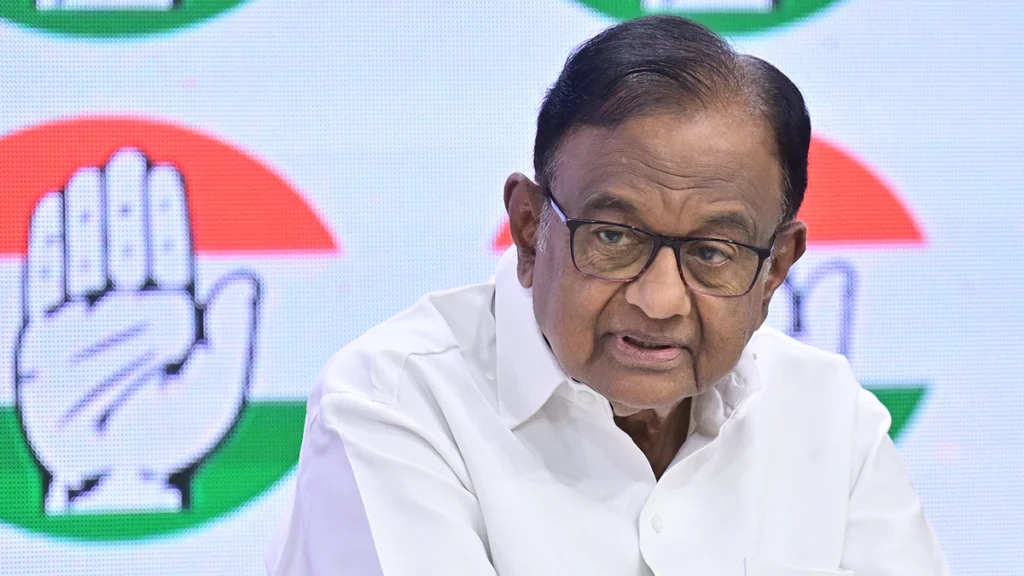
the Opposition Rahul Gandhi launched a scathing attack against Prime Minister Narendra Modi’s administration, the government has hit back with a striking revelation—claiming that senior Congress Members of Parliament (MPs), including former Finance Minister P. Chidambaram, actively supported the proposal in a parliamentary panel.
As the October 15 implementation date approaches, understanding the nuances of this political row, the economics behind the Merchant Discount Rate (MDR), and the future of India’s digital public infrastructure is crucial for every citizen and business owner.
What is the New UPI Fee Rule? Before delving into the political rhetoric, it is essential to clarify the facts of the new mandate. On Tuesday, the Indian government officially announced a 0.4 percent fee on UPI merchant transactions exceeding ₹2,000. This new levy is scheduled to come into effect on October 15, 2026.
For the everyday consumer, the Finance Ministry has provided a major relief: the fee will strictly apply to merchant payments. Person-to-person (P2P) transfers and any merchant transactions below the ₹2,000 threshold will remain completely free of charge. The introduction of this fee marks a significant policy shift from the zero-charge regime that helped UPI achieve unprecedented penetration across the subcontinent, from large retail chains to small street vendors.
Rahul Gandhi’s Scathing Attack on the Modi Government The opposition was quick to capitalize on the public anxiety surrounding the end of entirely free digital transactions. Leading the charge, senior Congress leader Rahul Gandhi fiercely criticized the move. Gandhi framed the policy shift not as an economic necessity, but as a geopolitical capitulation.
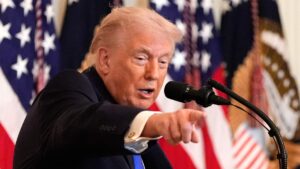
In a sharp statement, Gandhi alleged that the decision to levy a fee on UPI merchant transactions was a result of international pressure. He accused Prime Minister Narendra Modi of deciding to “prostrate” before US President Donald Trump, alleging that the introduction of the fee was designed to transfer a massive amount of money to foreign entities and American financial tech giants. This narrative aimed to paint the Modi government as anti-small-business and susceptible to Western lobbying, striking a chord with millions of small and medium enterprise (SME) owners who rely on UPI daily.
The Government’s Comeback: Congress MPs Backed the Move However, the government was swift to counter Gandhi’s allegations with documentation from the nation’s own legislative process. Government functionaries questioned the validity of the Congress party’s outrage, pointing out a glaring contradiction in their political stance.
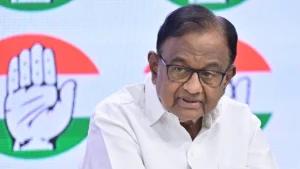
According to official sources, the proposal to introduce a tiered Merchant Discount Rate (MDR) and a revenue framework for UPI transactions was formally adopted in August by the Parliamentary Standing Committee on Finance. Notably, five prominent Congress MPs were present when this report was adopted: former Finance Minister P. Chidambaram, former UPA minister Manish Tewari, Gaurav Gogoi, Kishori Lal, and K. Gopinath.
A government official highlighted that there was no dissent recorded by any of these Congress leaders in the published minutes of the committee meeting. “Why is Rahul Gandhi opposing something his own MPs, including former finance minister P Chidambaram and former minister in the UPA government Manish Tewari, supported within the parliamentary panel?” the official remarked, throwing the ball back into the opposition’s court.
Why Did the Parliamentary Panel Recommend the UPI Fee? To look past the political theater, one must examine the economic rationale provided by the Parliamentary Standing Committee on Finance, which is headed by BJP MP Bhartruhari Mahtab. The committee’s report painted a sobering picture of the backend realities of operating the world’s most robust real-time payment system.
The panel noted that while statutory provisions do allow for a calibrated MDR on high-value transactions, delaying the operationalization of such a framework puts the entire ecosystem at risk. Currently, Payment Service Providers (PSPs) and banks are heavily dependent on government subsidies to run the zero-charge UPI network. The numbers provided in the report are staggering: UPI is projected to process up to 150 billion transactions per month and is on track to add 600 million new users.
However, the current financial model is unsustainable. The government incentive currently covers merely 11 percent of the industry’s actual operating costs and only 14 percent of potential MDR collections. This massive structural funding gap severely impacts the ability of payment networks to make crucial long-term investments in cybersecurity, fraud prevention, server maintenance, and network infrastructure. Without revenue generation from high-value commercial transactions, the safety and scalability of India’s digital payment infrastructure could be compromised.
Finance Ministry Rejects Foreign Influence Claims Addressing Rahul Gandhi’s claims of foreign lobbying and American pressure, the Finance Ministry issued a strong rebuttal. Taking to social media, the ministry categorically denied any external interference in India’s financial policymaking.
“Some claims suggest the change is due to foreign influence. This is false. India’s UPI policy decisions are made independently, with the clear goal of building a self-sustaining, inclusive, and affordable digital payments ecosystem,” the Ministry stated. The government reiterated that creating a self-sustaining model is a domestic economic imperative, not a concession to any foreign leader or corporation.
The Broader Impact on India’s Digital Economy The transition from a completely free service to a nominally monetized one is a natural evolution for digital public goods of this scale. While small merchants and everyday consumers are shielded by the ₹2,000 exemption, larger retail businesses will have to factor the 0.4 percent MDR into their operational costs. Banks and payment aggregators, who have long complained about the high costs of processing millions of free transactions daily, have welcomed the move as a step toward financial viability.
Conclusion The UPI fee row highlights the complex intersection of economics and politics in modern India. While the Congress leadership attempts to corner the government on the grounds of consumer burden and foreign influence, the government has effectively leveraged parliamentary records to highlight bipartisan consensus at the committee level. As October 15 approaches, the focus will inevitably shift from political blame games to the on-ground implementation of the fee, and how the Indian merchant community adapts to the new era of monetized digital payments.