US House Clears New Russia Sanctions Bill: Is India at Risk of Donald Trump’s 100% Tariff?
US House Clears New Russia Sanctions Bill: Is India at Risk of Donald Trump’s 100% Tariff?
In a significant geopolitical development that could reshape global trade dynamics, the United States House of Representatives has passed a stringent new Russia sanctions bill. The legislation, which cleared the House on a decisive 262-159 vote on Wednesday, aims to drastically tighten the financial noose around Moscow by penalizing foreign nations and entities that continue to import Russian oil. While the bill is primarily targeted at crippling Russia’s ability to fund its ongoing military operations in Ukraine, it has triggered immediate alarm bells in New Delhi.
India, which has emerged as one of the largest buyers of discounted Russian crude oil since the outbreak of the Ukraine conflict, now finds itself squarely in the crosshairs of potential US secondary sanctions. Complicating matters further is the looming shadow of the 2026 US Presidential elections. Former US President and current Republican candidate Donald Trump has recently escalated his ‘America First’ rhetoric, threatening to impose a crippling 100% tariff on countries that conduct business with Russia or seek to undermine the dominance of the US dollar. As the US House takes legislative action, the possibility of a severe economic confrontation between Washington and New Delhi has become a pressing concern.
Understanding the New US House Russia Sanctions Bill The newly passed legislation represents a major escalation in Washington’s economic warfare against Moscow. Despite the existing price caps and sanctions imposed by the G7 and Western allies, Russia has managed to keep its economy afloat largely by redirecting its oil exports to energy-hungry Asian markets, primarily India and China.
This new bill seeks to close those loopholes by introducing aggressive secondary sanctions. It mandates strict penalties on financial institutions, shipping companies, and national governments that facilitate the trade of Russian energy outside the predefined Western price caps. For the bill to become law, it still needs to pass the US Senate and receive the President’s signature, but its successful passage in the House highlights a strong, growing consensus in Washington to aggressively target Russia’s remaining economic lifelines—regardless of the collateral damage to allied nations.
India’s Strategic Reliance on Russian Crude Oil To understand the gravity of this development for India, one must look at the shift in global energy supply chains over the past few years. Prior to February 2022, Russia accounted for less than 1% of India’s total crude oil imports. However, as Western nations shunned Russian energy, Moscow offered its Ural crude at steep discounts.
Seizing the opportunity to secure energy for its population of over 1.4 billion and to tame domestic inflation, India rapidly ramped up its imports. Today, Russia is India’s top oil supplier. The Indian government has consistently defended this policy on international platforms, asserting that purchasing cheaper oil is a sovereign necessity to ensure energy security. Furthermore, Indian refineries process a significant portion of this Russian crude into refined petroleum products, which are then exported globally, including back to Europe. This mechanism has ironically helped stabilize global fuel prices. However, the new US House bill does not differentiate between energy security and sanctions evasion, putting India’s pragmatic oil strategy at severe risk.
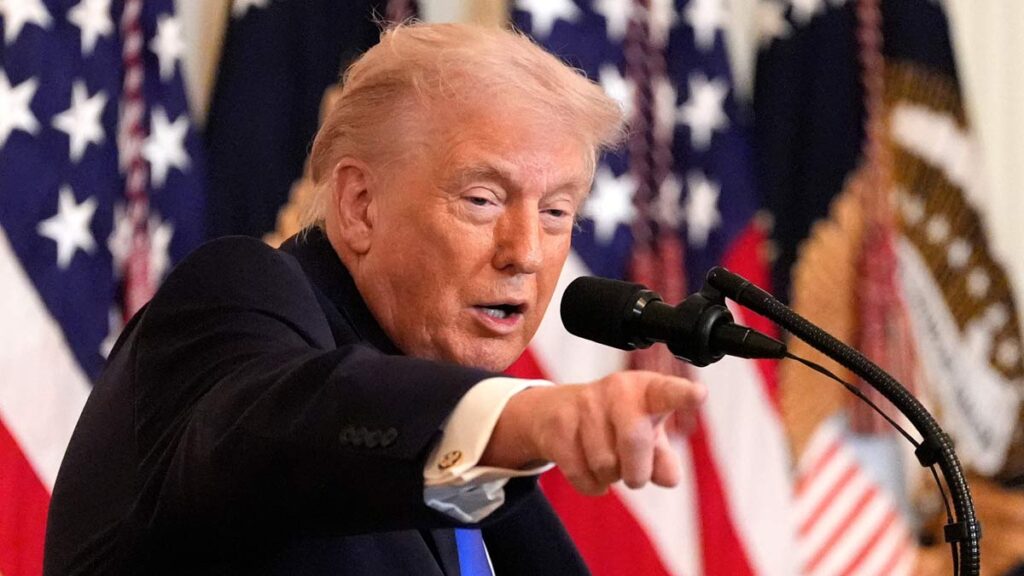
The Threat of Donald Trump’s 100% Tariff The legislative threat is compounded by the turbulent political climate in the United States. Donald Trump has made aggressive trade policies a cornerstone of his 2026 campaign. Angered by global movements to bypass Western financial systems—often referred to as de-dollarization—and frustrated by countries ignoring US sanctions, Trump has issued a stark warning.
He has threatened to slap a massive 100% tariff on imported goods from any nation that continues to do large-scale business with Russia or shifts trade away from the US dollar. If the current sanctions bill becomes law, and if Donald Trump returns to the Oval Office, he would possess both the legal framework and the political will to execute these threats. For India, which has been exploring trade settlements in local currencies (like the Rupee-Ruble mechanism) to bypass Western banking restrictions, this combination of a new sanctions law and Trump’s tariff threats represents a worst-case scenario.
Potential Economic Impact on India If Washington moves forward with secondary sanctions or if Trump imposes a 100% tariff on Indian goods, the economic fallout for India would be devastating. The United States is India’s largest trading partner, with bilateral trade heavily favoring Indian exports in several key sectors.
- Export Sector Crisis: A 100% tariff would effectively price Indian goods out of the American market. Key export sectors such as IT services, pharmaceuticals, textiles, gems, and jewelry would face catastrophic losses, leading to factory closures and massive job cuts in India.
- Inflation and Energy Costs: If the fear of sanctions forces India to halt its procurement of discounted Russian oil, New Delhi will be forced to turn to the Middle East for more expensive crude. This sudden spike in energy import costs would widen India’s current account deficit, drive up domestic fuel prices, and trigger widespread inflation.
- Currency Volatility: An outright trade war with the US would severely impact foreign direct investment (FDI) and foreign portfolio investment (FPI) in India. Investors pulling capital out of Indian markets would cause a sharp depreciation of the Indian Rupee against the US Dollar.
New Delhi’s Diplomatic Tightrope India now faces one of its most complex diplomatic challenges in recent history. On one hand, the India-US relationship has grown into a Comprehensive Global Strategic Partnership, driven by shared interests in the Indo-Pacific region and mutual concerns over an assertive China (via the QUAD). On the other hand, India has a time-tested defense and strategic relationship with Russia that it cannot afford to abandon.
Indian diplomats will likely engage in high-level lobbying in Washington to ensure a waiver for India, arguing that keeping global oil prices stable benefits the US economy as well. New Delhi will have to expertly navigate the volatile US political landscape, convincing American lawmakers that penalizing India would ultimately harm US strategic interests in Asia.
Conclusion The passage of the Russia sanctions bill in the US House of Representatives is a stark reminder of the fragile geopolitical environment. As India watches the progress of this bill and the rhetoric of the US elections, policymakers in New Delhi must prepare for potential economic shocks. Balancing its crucial partnership with the United States while maintaining its vital energy trade with Russia will test the absolute limits of India’s strategic autonomy and diplomatic prowess in the coming months.