Why Shashi Tharoor Wants India to Lead Global Call for Peace in West Asia Conflict
Why Shashi Tharoor Wants India to Lead Global Call for Peace in West Asia Conflict
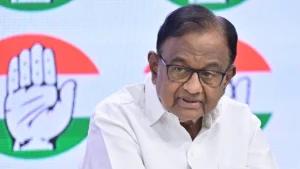
As the conflict in West Asia deepens and threatens to spiral into a wider regional crisis, senior Congress leader Shashi Tharoor has made a strong case for India to step forward—not as a bystander, but as a leading voice calling for peace.
At a time when global powers are either directly involved or sharply divided, Tharoor’s argument is simple yet significant: India, with its unique geopolitical position and moral standing, can act as a credible bridge between warring sides.
A call for India to become a “voice for peace”
Tharoor has urged New Delhi to take the lead in forming an international coalition that demands an end to hostilities in West Asia. According to him, both sides in the conflict may be too entrenched in their positions to step back on their own, which is why a neutral but influential country like India should step in.
He suggests that India should not limit itself to cautious diplomacy but instead become a “loud voice for peace,” advocating dialogue, de-escalation, and a negotiated settlement. The idea is not to take sides, but to push both parties toward a face-saving exit from the conflict.
In Tharoor’s view, wars often continue not because solutions are absent, but because no neutral actor is willing to actively propose one. That, he believes, is where India can make a difference.
Why India has a direct stake
Unlike distant global powers, India’s connection to West Asia is deep, immediate, and multidimensional. Tharoor has repeatedly highlighted that the region’s instability directly impacts India’s national interests.
For one, millions of Indians live and work in Gulf countries. Any escalation in conflict puts their safety and livelihoods at risk. From construction workers to professionals, the Indian diaspora forms a crucial link between the two regions.
Then there is energy security. A large portion of India’s oil and gas imports comes from West Asia. Disruptions—especially around critical routes like the Strait of Hormuz—can trigger fuel price spikes and economic strain back home.
Trade and supply chains are another concern. The ongoing conflict has already begun affecting shipping routes and logistics, raising fears of broader economic consequences.
Put simply, for India, this is not a distant war—it is a crisis with immediate domestic implications.
India’s unique diplomatic position
What makes India particularly suited to play a mediating role is its balanced foreign policy. Over the years, New Delhi has maintained strong ties with multiple actors in West Asia, including Iran, Israel, and Gulf nations.
This approach—often described as “multi-alignment”—allows India to engage with competing powers without being locked into rigid alliances.
Tharoor believes this neutrality gives India credibility. Unlike Western powers, which are often viewed as partisan, India is seen as a country that can speak to all sides without hidden agendas.
This positioning could allow India to facilitate dialogue in a way that few others can.
A rare moment of bipartisan convergence
Interestingly, Tharoor’s stance also reflects a broader consensus emerging within India’s political landscape. While he belongs to the Opposition, he has acknowledged and even praised the government’s diplomatic outreach efforts in the region.
This rare convergence underscores the seriousness of the situation. When it comes to foreign policy—especially in times of global crisis—there appears to be an understanding that national interest must come above political divides.
Tharoor’s intervention, therefore, is less about criticism and more about urging a stronger, more proactive role.
The idea of a “third force”
One of the most compelling aspects of Tharoor’s argument is his call for India to emerge as a “third force” in the conflict.
In a scenario where the main actors are locked in confrontation and global powers are either aligned or ineffective, a third force can help create space for dialogue. This does not mean imposing solutions, but facilitating them.
Tharoor points out that both sides could potentially claim partial success and step back—but may need external encouragement to do so. India, he believes, can provide that nudge.
This approach also aligns with India’s historical role in global diplomacy, from the Non-Aligned Movement to peacekeeping efforts.
Challenges India may face
However, stepping into such a role is not without risks.
For one, the geopolitical environment is far more complex today. Any move by India will be closely watched by major powers like the United States, China, and Russia, all of whom have stakes in the region.
There is also the question of influence. While India has goodwill, it may not yet have the leverage to bring warring parties to the negotiating table.
Additionally, taking a more active stance could expose India to diplomatic pressure or even backlash if the effort does not succeed.
Yet, Tharoor seems to argue that the risks of inaction may be greater than the risks of engagement.
A test of India’s global ambitions
At its core, this debate is about India’s evolving role in the world.
As the country positions itself as a rising global power, expectations are growing—not just in economic or military terms, but also in diplomacy and conflict resolution.
Tharoor’s call is, in many ways, a challenge: if India aspires to global leadership, it must be willing to step up in moments of crisis.
The West Asia conflict, with its global implications, presents such a moment.
The road ahead
Whether India chooses to take on this leadership role remains to be seen. The government has already been engaging with various stakeholders and monitoring the situation closely.
But Tharoor’s message adds urgency to the conversation. It suggests that quiet diplomacy may not be enough—that what is needed is a visible, assertive push for peace.
As the conflict continues to impact lives, economies, and global stability, the question is no longer whether India is affected—but whether it is ready to act.
In a world searching for mediators, India may have an opportunity to redefine its place—not just as a participant in global affairs, but as a peacemaker.
Get smarter responses, upload files and images, and more.