Bihar 2025 Election: 12 Senior BJP Candidates Defeated — Only 6 Congress Nominees Secure Victory
Bihar 2025 Election: 12 Senior BJP Candidates Defeated — Only 6 Congress Nominees Secure Victory
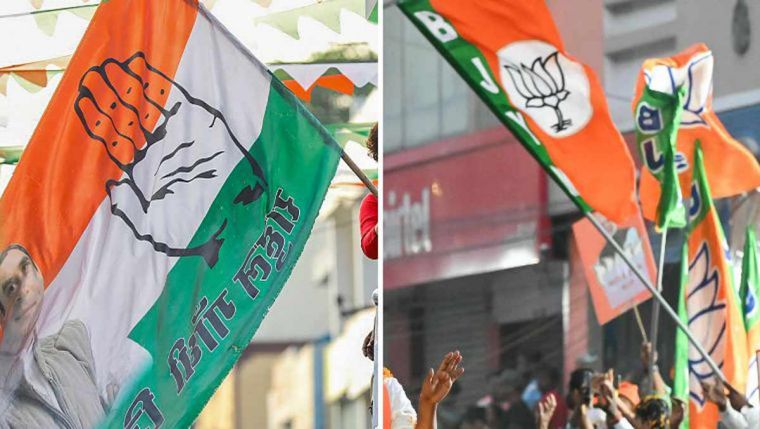
The 2025 Bihar Assembly elections delivered a decisive mandate for the National Democratic Alliance (NDA), yet the results also brought surprising setbacks for the Bharatiya Janata Party (BJP). Despite overall gains, 12 major BJP candidates faced defeat in key constituencies. On the other hand, the Congress party continued its downward spiral, securing just 6 wins out of 61 contesting candidates.
These mixed results reveal deeper political shifts and underline the changing electoral landscape of Bihar.
12 Major BJP Candidates Who Lost the Election
Although the BJP emerged strong statewide, several of its significant candidates could not secure victories. These losses came across diverse regions — some by large margins, others by razor-thin differences. Key defeats include:
- Baisi: BJP candidate Vinod Kumar lost by a wide margin, while AIMIM’s Ghulam Sarwar claimed the seat.
- Bisfi: Haribhushan Thakur was defeated by RJD candidate Asif Ahmad with a margin of over 8,000 votes.
- Chanpatia: Umakant Singh lost by a slim margin of just 602 votes to Congress candidate Abhishek Ranjan.
- Forbesganj: Vidya Sagar Kesari faced a narrow defeat of only 221 votes; Congress’s Manoj Biswas won the seat.
- Kishanganj: Sweety Singh lost as Congress’s Md. Qamrul Hoda secured victory by about 12,800 votes.
- Kochadhaman: BJP’s Beena Devi finished in third place behind AIMIM and RJD candidates.
- Raghopur: BJP candidate Satish Kumar lost to RJD’s Tejashwi Yadav by more than 14,500 votes.
- Warisaliganj: Aruna Devi was defeated by RJD candidate Anita by around 7,500 votes.
- Several other constituencies also witnessed BJP setbacks, highlighting organizational and local-level challenges.
These defeats came as a surprise because they contrast sharply with the party’s statewide momentum, revealing pockets of resistance and dissatisfaction at the grassroots level.
Congress Wins Only 6 Seats Out of 61
For the Congress party, the election brought yet another disappointing chapter. Despite contesting 61 seats, the party managed to secure just six victories. The winners include:
- Valmiki Nagar: Surendra Prasad secured a notable win.
- Araria: Abidur Rahman achieved a decisive victory.
- Manihari: Manohar Singh won from this constituency.
- Chanpatia: Abhishek Ranjan defeated BJP’s Umakant Singh.
- Kochadhaman: Congress performed relatively well, securing key vote shares.
- Kishanganj: Md. Qamrul Hoda earned a clear win over BJP’s candidate.
These limited victories underline Congress’s struggle in retaining relevance and rebuilding its base in Bihar.
Political Significance of These Results
The election outcomes reflect several important political messages:
1. Internal Weaknesses in the BJP
Despite a sweeping mandate overall, BJP’s failure to secure several strongholds indicates internal structural gaps. Losing prominent seats challenges the party to re-evaluate its grassroots engagement and candidate selection strategies.
2. Congress’s Ongoing Decline
Winning just six seats points to a steep decline in Congress’s organizational strength. Even as part of a broader opposition bloc, the party failed to generate momentum, reflecting weak leadership, campaign planning, and voter connection.
3. Importance of Local Issues
The results show that national narratives alone are not enough. Voters placed strong emphasis on local development, constituency-specific challenges, and direct engagement with leaders.
What Lies Ahead?
- BJP’s Post-Election Assessment: The party will likely analyze why certain high-profile candidates lost despite overall success. Expect strategic reshuffling and stronger organizational efforts at the booth level.
- Congress’s Need for Reinvention: The party must rebuild its cadre, modernize its campaign strategy, and reconnect with its lost voter base to remain competitive in Bihar.
- Future of Alliances: With NDA strengthening its position, opposition groups may need to rethink alliances, leadership roles, and issue-based campaigns to make a comeback.