Former Bangladesh Minister Alleges U.S. Aid Agency and Clinton Network Behind Sheikh Hasina’s Downfall
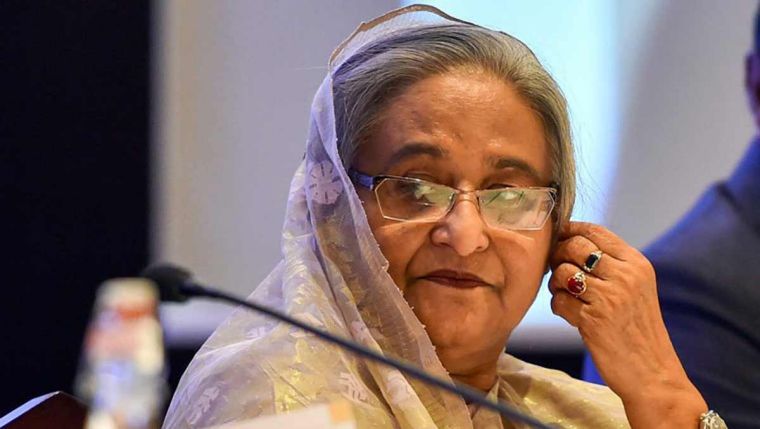
Former Bangladesh Minister Alleges U.S. Aid Agency and Clinton Network Behind Sheikh Hasina’s Downfall
In a stunning revelation that has reignited political debate across South Asia, former Bangladesh minister Mohibul Hasan Chowdhury has accused the United States and entities linked to former U.S. President Bill Clinton of orchestrating the downfall of Prime Minister Sheikh Hasina’s government. According to Chowdhury, the U.S. Agency for International Development (USAID) and several non-governmental organisations (NGOs) allegedly worked to destabilise the Hasina administration through covert funding and strategic manipulation of domestic protests.
Chowdhury, who served under the Hasina-led Awami League government, claimed that the mass uprising that forced Hasina to flee Bangladesh in 2024 was “not spontaneous” but “carefully designed” by foreign powers aiming to realign Bangladesh’s political landscape. He alleged that the movement, initially portrayed as a grassroots student protest over government job quotas, evolved into a foreign-backed campaign that eventually brought the Nobel Laureate Muhammad Yunus-led interim administration to power.
Key Allegations Against USAID and Clinton Network
In his detailed statement, Chowdhury outlined several claims that have sparked controversy within Bangladesh and abroad:
- Foreign-Funded NGOs:
He asserted that since 2018, numerous NGOs operating in Bangladesh received financial support from USAID and other Western development agencies under the guise of humanitarian and governance programs. However, he claimed that a significant portion of these funds was diverted to support political groups opposed to the Awami League. - Clinton-Yunus Nexus:
Chowdhury alleged a long-standing association between the Clinton Foundation and Muhammad Yunus, suggesting that this network was used to facilitate the political transition that led to Hasina’s ouster. He further claimed that the so-called “reform movement” was designed to project Yunus as a pro-democracy figure while undermining Hasina’s authority. - Strategic Pressure Over National Interests:
The former minister linked the crisis to Sheikh Hasina’s refusal to meet U.S. demands for strategic access to the St. Martin’s Island in the Bay of Bengal. He suggested that Bangladesh’s growing ties with China and Russia also irritated Washington, adding to the alleged push for regime change.
Washington Denies Allegations
The United States has consistently denied any involvement in the 2024 Bangladesh political crisis. American officials have repeatedly maintained that the U.S. supports democratic values globally but does not interfere in sovereign nations’ internal politics. Despite these denials, Chowdhury’s claims have gained traction among Awami League supporters, many of whom believe that the rapid collapse of Hasina’s 15-year administration could not have happened without foreign influence.
Political observers note that USAID, the U.S. government’s humanitarian arm, has often been accused—rightly or wrongly—of serving as a soft-power instrument in politically sensitive regions. However, no concrete evidence has yet surfaced to substantiate the former minister’s allegations.
Aftermath of Hasina’s Fall
The 2024 uprising that toppled Sheikh Hasina left more than 700 people dead and thousands injured. Massive protests engulfed Dhaka and other major cities, crippling government operations. Amid escalating violence, Hasina fled the country, paving the way for a caretaker government led by Muhammad Yunus.
The new regime pledged to hold “free and fair elections,” but political tensions remain high. Supporters of the Awami League claim that the transition was a Western-engineered coup disguised as a people’s movement. Meanwhile, Yunus’s administration has promised transparency and reform while facing scrutiny over alleged links to Western donors and foundations.
Implications for Bangladesh and South Asia
The allegations by Chowdhury have deepened existing divisions in Bangladesh’s political landscape and strained its relations with the United States. Analysts warn that if the claims gain wider credibility, they could impact Bangladesh’s participation in international development programs and its diplomatic posture toward major powers.
- Impact on U.S.–Bangladesh Relations:
The charges could reignite anti-American sentiment in Bangladesh and force Washington to re-examine its aid strategies in South Asia. - Regional Balance of Power:
Bangladesh’s shifting alliances may have implications for India, China, and other regional stakeholders, particularly regarding security in the Bay of Bengal and the Indo-Pacific. - Global Perception of Aid Diplomacy:
The episode highlights ongoing global concerns about the politicisation of foreign aid. Countries like Bangladesh may now push for greater oversight of NGO operations and stricter transparency in international funding.
Political Repercussions and Future Outlook
While Chowdhury’s accusations have yet to be independently verified, they have sparked significant discussion both inside and outside Bangladesh. Hasina’s supporters view his statements as validation of their long-held belief that her removal was externally influenced. Meanwhile, critics of the former regime argue that blaming foreign powers is a way to deflect from domestic discontent and corruption that led to her downfall.
For now, Bangladesh remains in a state of cautious transition. The interim government faces the dual challenge of restoring stability and proving its legitimacy, while the Awami League attempts to regroup and reclaim political ground. Whether Chowdhury’s allegations will lead to an official investigation or fade into political rhetoric remains to be seen.