Brazilian Model Breaks Silence After Photo Allegedly Used to Cast “22 Votes” in Haryana Election
Brazilian Model Breaks Silence After Photo Allegedly Used to Cast “22 Votes” in Haryana Election
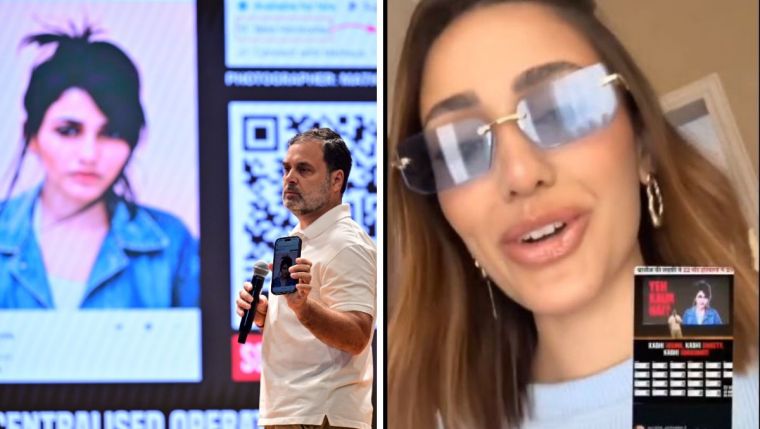
A Brazilian model has publicly reacted to shocking allegations that her photograph was used multiple times in voter rolls during the Rahul Gandhi-led claim of electoral malpractice in the Haryana Assembly election. The model, identified as Larissa Nery, expressed disbelief and concern after her image surfaced in Indian electoral documentation under various names and counted as having allegedly “voted 22 times.”
In a video posting on her social media, Larissa said:
“Guys, I’m gonna tell you a joke — it’s too horrible! They are using an old photo of mine for elections in India, showing me as Indian. What madness is this?”
She clarified that the photograph in question dated back to a modelling shoot years ago and was publicly available on a stock photo platform, thereby making it vulnerable to misuse. Larissa revealed that after the image gained viral traction, journalists from India reached out to her salon and acquaintances, adding to her astonishment.
The Allegation in Focus
During a press conference, Rahul Gandhi alleged that a single image appeared in the voter list of Haryana’s Rai constituency at least 10 times under different pseudonyms — including “Seema”, “Sweety”, “Saraswati”, “Rashmi” and “Vilma”. He claimed this as evidence of large scale manipulation of electoral rolls, putting the figure of 22 votes tied to a “Brazilian model”.
The model’s image — sourced from a free-to-use site and credited to photographer Matheus Ferrero — was said to have been used across booths in the constituency, suggesting a “centralised operation” of fraud.
Model’s Response and Emotional Impact
Larissa’s reaction ranged from humour to shock:
“They used my photo for something related to elections in India, portraying me as Indian. I couldn’t believe it when a friend sent me the printout.”
She described receiving unexpected calls, being tagged in memes, and seeing screenshots of her image labelled under Indian names. The incident has left her unsettled, with concerns about identity, consent and the invasive nature of viral misinformation.
“It’s terrifying to see how a photo from years ago can be turned into a political weapon overnight.”
Digital Misuse, Voting Integrity and Global Implications
The episode casts a spotlight on how freely-available images can be commandeered for electoral manipulation or misinformation. It raises serious questions about the authenticity of voter rolls, the safeguard mechanisms in place, and the broader implications of image misuse across national boundaries.
Social media researchers note:
“What we’re seeing is a global problem — digital images can be repurposed in ways that undermine not just individuals, but democratic integrity.”
In India’s context, where digital voter lists are increasingly relied upon, this incident may prompt calls for stricter validation and audit mechanisms for personal images used in official documentation.
Political Fallout and Institutional Response
The Congress leadership’s allegations have stirred uproar in political circles. Rahul Gandhi’s presentation challenged the electoral establishment, pointing to the scale of alleged fake entries. Meanwhile, election authorities have defended the integrity of the polls, stating that no formal objections were lodged by polling agents on the day of voting.
The model’s involvement, albeit unwitting, has internationalised the discourse — pulling in elements of image rights, cross-border identity, and the ease of digital misuse.
What Happens Next?
For Larissa, the priority is clear: removing her image from misrepresented contexts and restoring personal reputation. She and her legal representatives are likely to explore the following:
- Official complaint with Brazilian and Indian cyber-crime/defamation units.
- Requests for removal of manipulated versions of her image online.
- Dialogue with platforms hosting the original photograph about usage and copyright.
For election authorities and policy makers in India this case may become a testbed for:
- Strengthening rules around image verification in voter registration.
- Introducing mechanisms to detect repeated entries of the same photograph under different identities.
- Public awareness campaigns about image misuse and digital deception.
Final Word
The Brazilian model’s startled reaction to a vote-fraud claim highlights how modern elections can get tangled in the web of digital identity and image misuse. Her message is simple yet powerful:
“I just want my life back — and for people to know not everything you see online is real.”
This incident serves as a cautionary tale, reminding democratic societies and individuals alike that while images may travel easily across borders, the responsibility to protect identity, truth and consent remains firmly anchored at home.